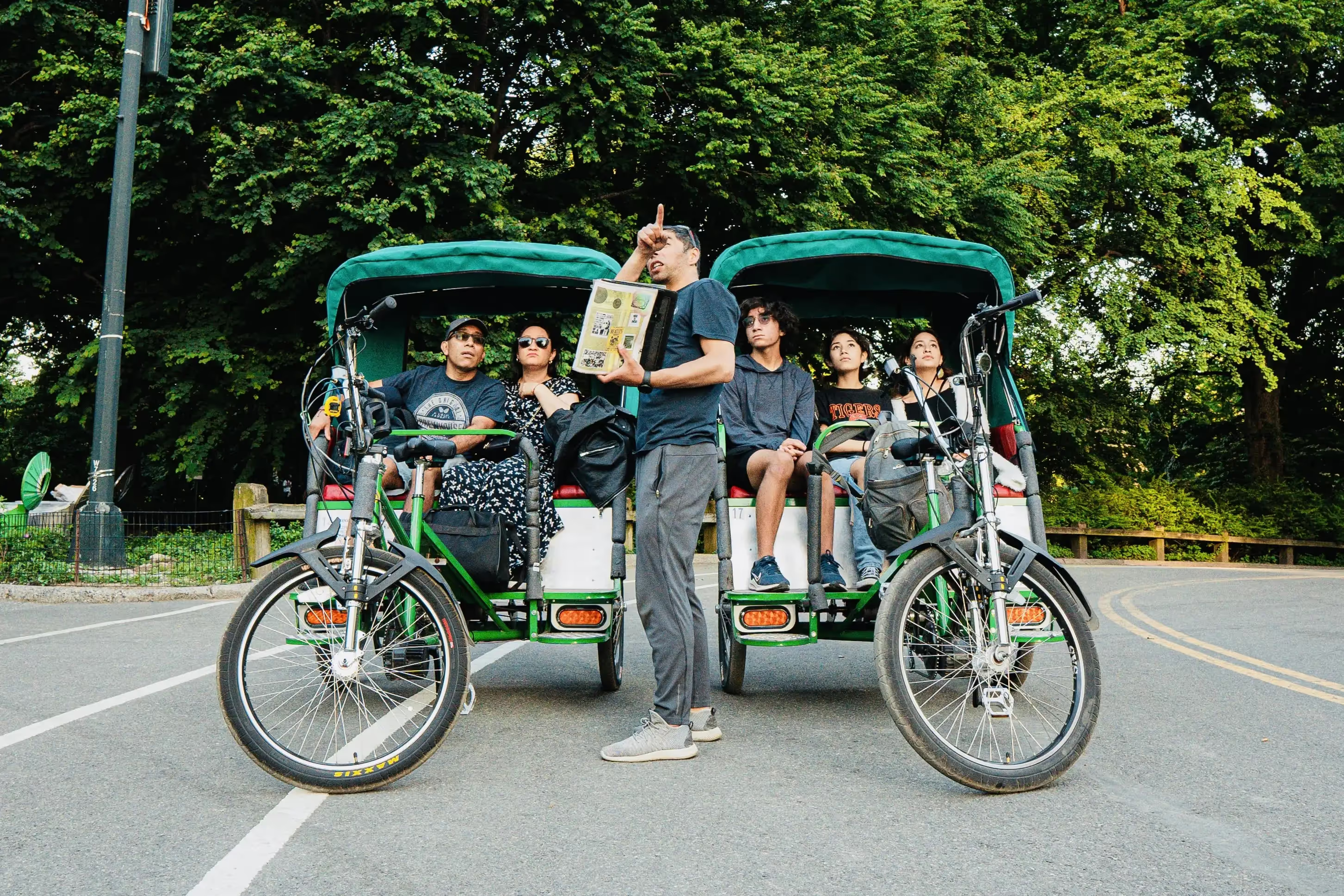
Over 250 attractions across 843 acres. Our licensed local tour guides share the must-see landmarks, hidden corners, movie locations, and family favorites worth your time in Central Park.
Central Park's 843 acres pack more landmarks per square mile than almost any park in the world — over 250 attractions across just 2.5 miles of green space. With 42 million visitors a year and so much to see, knowing what to prioritize makes the difference between a forgettable walk and a great NYC memory.
Below, our licensed local tour guides share every Central Park attraction worth your time. Filter by category, use the trip planner to build your day, or scroll the full list. Each entry includes exactly where to find it, how long it takes to walk from the nearest subway, and which of our guided tours covers it. If you'd rather see 50+ highlights in 60 minutes, the pedicab tour is at the bottom.


%20(1).webp)

The vaulted tunnel beneath Bethesda Terrace is one of the most architecturally significant spaces in the park. The ceiling has 16,000 hand-painted Minton encaustic tiles installed in 1863, forming an intricate geometric pattern that makes the space feel more like a medieval cloister than a park underpass. The acoustics are exceptional: sound made at one end carries perfectly to the other. Also the filming location for the John Wick: Chapter 2 tunnel shootout sequence. Worth standing still for a moment and looking up. Always accessible. Free.


The vaulted tunnel beneath Bethesda Terrace is one of the most architecturally significant spaces in the park. The ceiling has 16,000 hand-painted Minton encaustic tiles installed in 1863, forming an intricate geometric pattern that makes the space feel more like a medieval cloister than a park underpass. The acoustics are exceptional: sound made at one end carries perfectly to the other. Also the filming location for the John Wick: Chapter 2 tunnel shootout sequence. Worth standing still for a moment and looking up. Always accessible. Free.

.webp)
A small ornamental pond where Manhattanites have raced model sailboats every weekend since 1953. Rent remote-controlled boats from the Kerbs Memorial Boathouse on the east bank. Alice in Wonderland statue sits just to the north. Also where Stuart Little raced his boat in the 1999 film. Hans Christian Andersen storytelling runs here on Saturday mornings in summer. Boat rentals available weekends, spring through fall. Free to visit.
A small ornamental pond where Manhattanites have raced model sailboats every weekend since 1953. Rent remote-controlled boats from the Kerbs Memorial Boathouse on the east bank. Alice in Wonderland statue sits just to the north. Also where Stuart Little raced his boat in the 1999 film. Hans Christian Andersen storytelling runs here on Saturday mornings in summer. Boat rentals available weekends, spring through fall. Free to visit.
.webp)
An 11-foot bronze sculpture of Alice on a giant mushroom, surrounded by the Cheshire Cat, White Rabbit, Dormouse, and Mad Hatter. Commissioned in 1959 by philanthropist George Delacorte in memory of his late wife, who loved reading Alice in Wonderland to their children. Kids are actively encouraged to climb on it — the bronze is intentionally polished smooth from decades of small hands and shoes. One of the most photographed sculptures in any American park. Adjacent to Conservatory Water where model sailboats race on weekends. Open 24 hours. Free.
An 11-foot bronze sculpture of Alice on a giant mushroom, surrounded by the Cheshire Cat, White Rabbit, Dormouse, and Mad Hatter. Commissioned in 1959 by philanthropist George Delacorte in memory of his late wife, who loved reading Alice in Wonderland to their children. Kids are actively encouraged to climb on it — the bronze is intentionally polished smooth from decades of small hands and shoes. One of the most photographed sculptures in any American park. Adjacent to Conservatory Water where model sailboats race on weekends. Open 24 hours. Free.
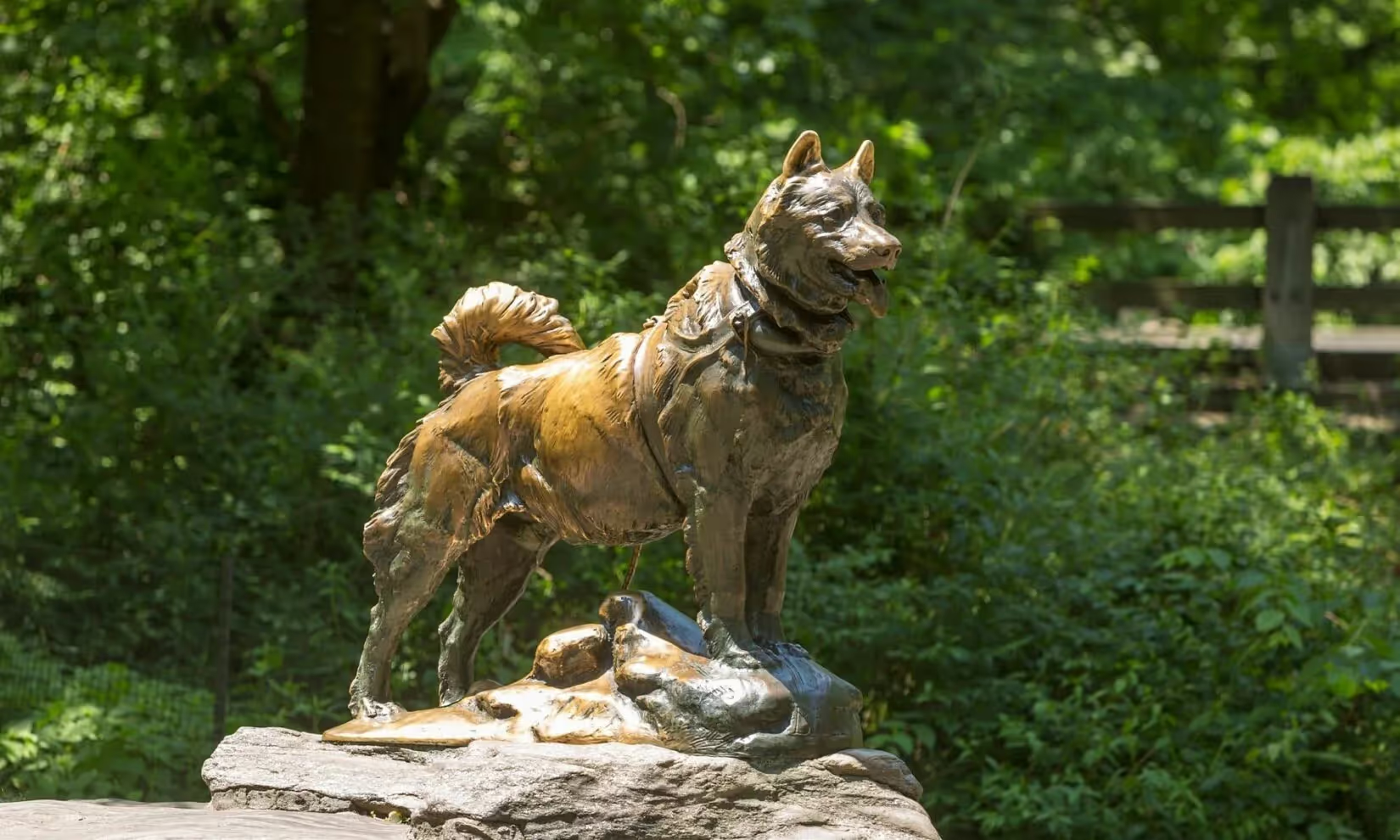
The bronze sled dog commemorating Balto, the Siberian Husky who led the final leg of the 1925 serum run to Nome, Alaska — a 674-mile relay through blizzard conditions to deliver diphtheria antitoxin to an isolated community. Installed in Central Park in 1925, the same year as the run, while Balto was still alive. The bronze has been worn smooth by a century of children climbing on it. The 1995 animated film Balto is based on this story. Open 24 hours. Free.
The bronze sled dog commemorating Balto, the Siberian Husky who led the final leg of the 1925 serum run to Nome, Alaska — a 674-mile relay through blizzard conditions to deliver diphtheria antitoxin to an isolated community. Installed in Central Park in 1925, the same year as the run, while Balto was still alive. The bronze has been worn smooth by a century of children climbing on it. The 1995 animated film Balto is based on this story. Open 24 hours. Free.
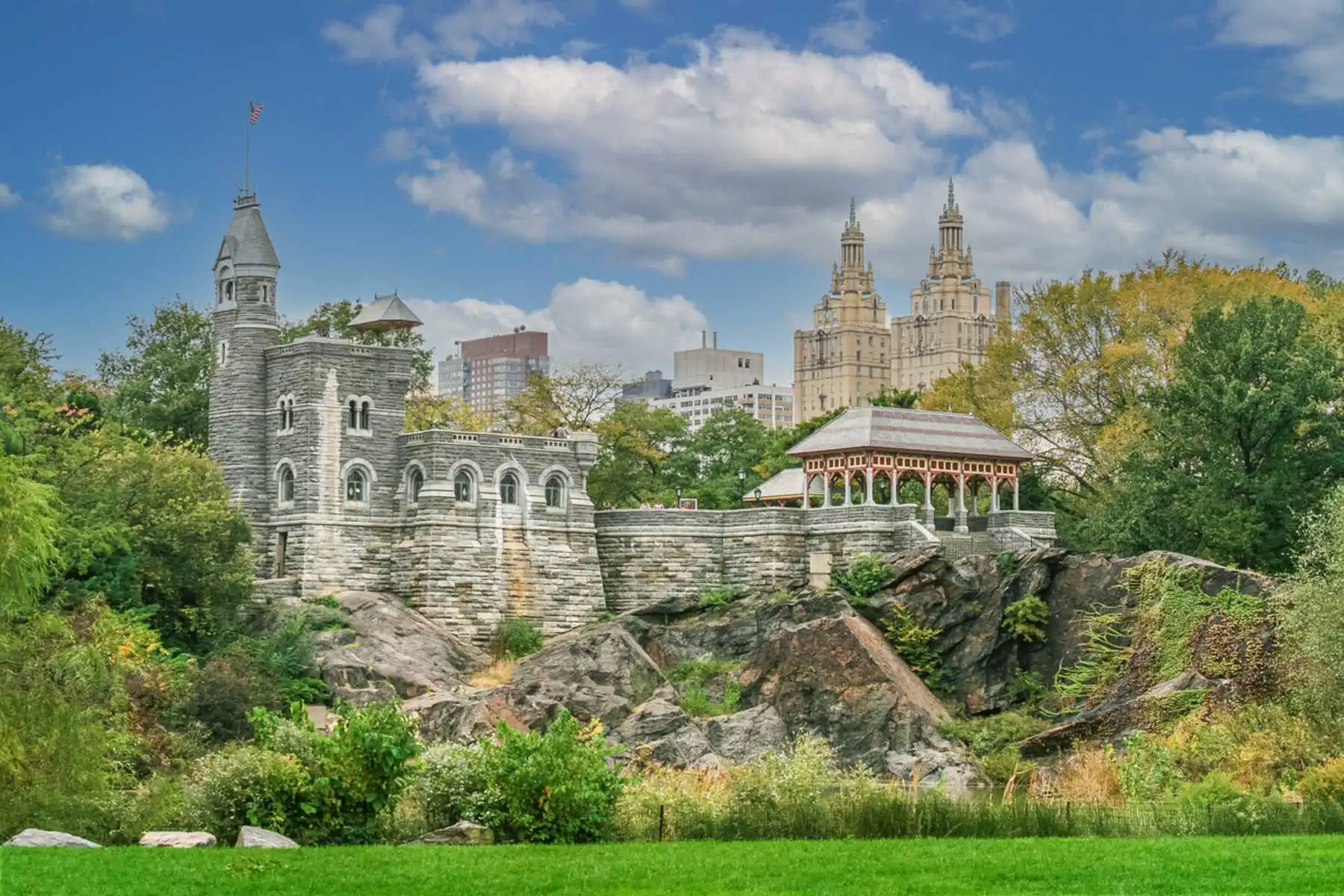
A miniature Gothic castle perched on Vista Rock — the second-highest natural elevation in Central Park. Built in 1869 as a Victorian folly with no original practical purpose, it became New York City's official weather station in 1919. When you hear "the temperature in Central Park" on the radio or television, it's measured from instruments on this roof. The upper terraces offer the best free panoramic view in the park: looking north across Turtle Pond, the Delacorte Theater, the Great Lawn, and the Upper West Side skyline beyond. Free entry. Open 10am–5pm daily. Walking tour includes an interior history visit.
A miniature Gothic castle perched on Vista Rock — the second-highest natural elevation in Central Park. Built in 1869 as a Victorian folly with no original practical purpose, it became New York City's official weather station in 1919. When you hear "the temperature in Central Park" on the radio or television, it's measured from instruments on this roof. The upper terraces offer the best free panoramic view in the park: looking north across Turtle Pond, the Delacorte Theater, the Great Lawn, and the Upper West Side skyline beyond. Free entry. Open 10am–5pm daily. Walking tour includes an interior history visit.
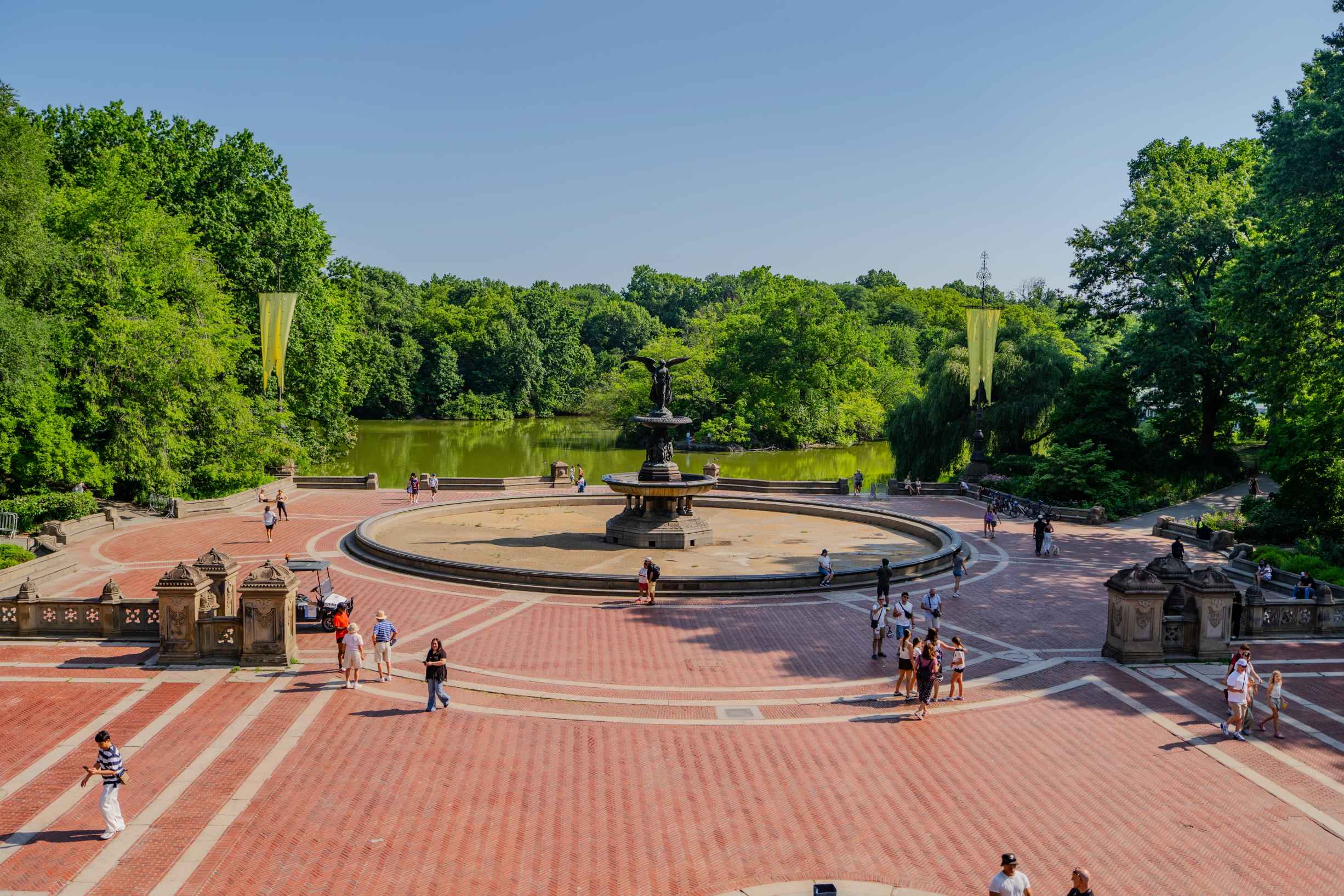
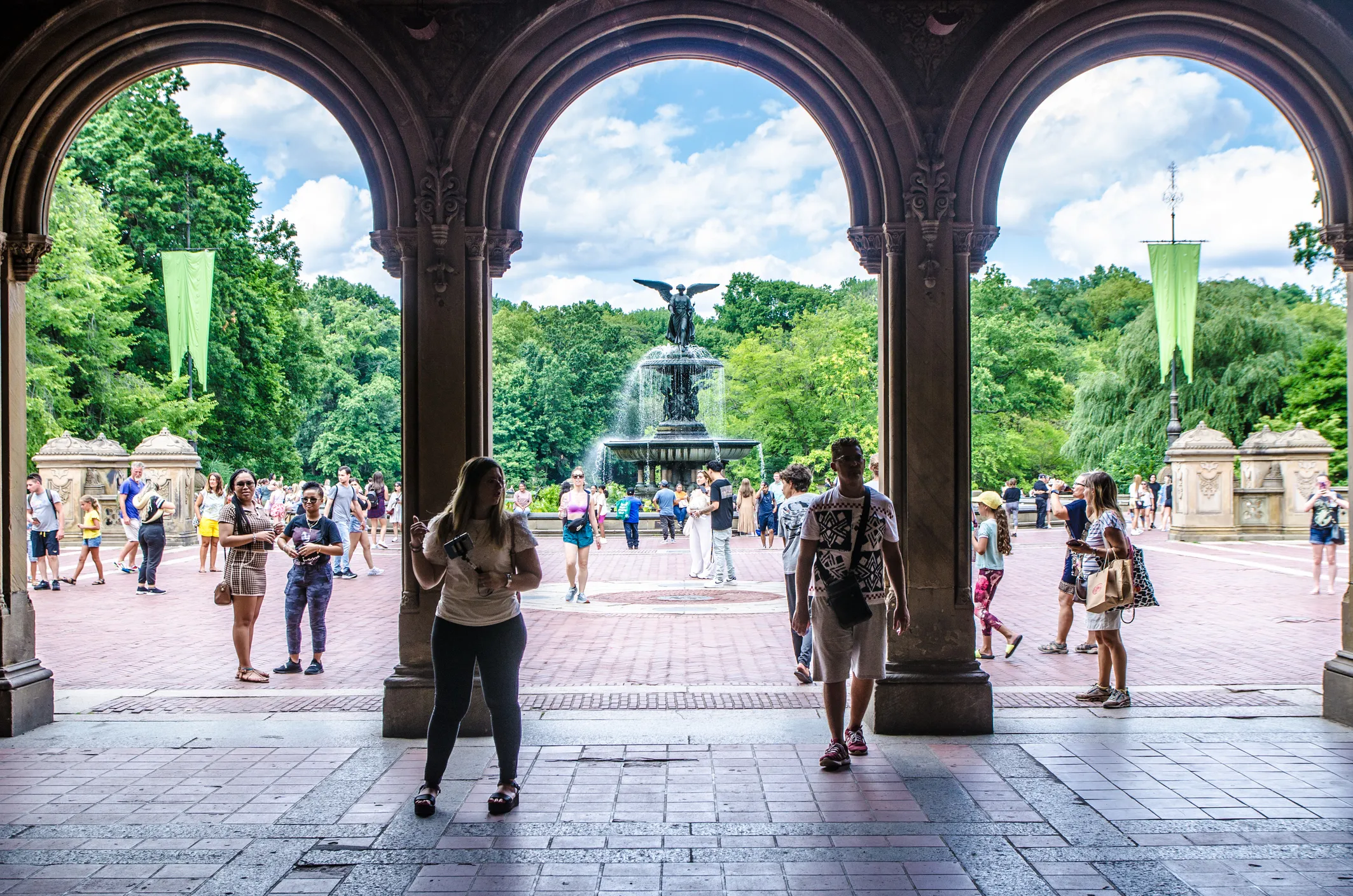
Built in 1864, Bethesda Terrace is the visual heart of Central Park — and the only sculpture commissioned as part of the park's original design sits at its center. The Angel of the Waters statue overlooks the Lake, where rowboats drift toward Bow Bridge. The lower arcade's tiled ceiling has over 16,000 hand-painted Minton tiles, one of the largest installations of its kind in North America. Featured in Home Alone 2, John Wick, and dozens of other films. Every Central Park pedicab and walking tour stops here for photos. Best light: late afternoon. Best angle: from the lower terrace steps looking up at the angel.
Built in 1864, Bethesda Terrace is the visual heart of Central Park — and the only sculpture commissioned as part of the park's original design sits at its center. The Angel of the Waters statue overlooks the Lake, where rowboats drift toward Bow Bridge. The lower arcade's tiled ceiling has over 16,000 hand-painted Minton tiles, one of the largest installations of its kind in North America. Featured in Home Alone 2, John Wick, and dozens of other films. Every Central Park pedicab and walking tour stops here for photos. Best light: late afternoon. Best angle: from the lower terrace steps looking up at the angel.

The most romantic bridge in Manhattan and the most filmed in New York City. Bow Bridge has appeared in When Harry Met Sally, Enchanted, Manhattan, Spider-Man 3, and roughly 70 other films. Built in 1862 of cast iron, it spans the Lake between Cherry Hill and the Ramble. The classic Instagram angle is from the southwest, with the Eldorado building's twin towers framing the bridge against the Upper West Side skyline. The view from the bridge itself, looking south across the Lake toward Bethesda Terrace, is what made it famous. Best photo time: early morning before crowds arrive.
The most romantic bridge in Manhattan and the most filmed in New York City. Bow Bridge has appeared in When Harry Met Sally, Enchanted, Manhattan, Spider-Man 3, and roughly 70 other films. Built in 1862 of cast iron, it spans the Lake between Cherry Hill and the Ramble. The classic Instagram angle is from the southwest, with the Eldorado building's twin towers framing the bridge against the Upper West Side skyline. The view from the bridge itself, looking south across the Lake toward Bethesda Terrace, is what made it famous. Best photo time: early morning before crowds arrive.
.webp)

Compact, walkable in under 2 hours, and home to over 150 species including snow leopards, grizzly bears, sea lions, and the penguin colony that inspired the movie Madagascar. The sea lion feedings at 11:30am, 2pm, and 4pm draw the biggest crowds — arrive 15 minutes early for front-row spots. Adjacent to the smaller Tisch Children's Zoo designed specifically for under-8s. Not as overwhelming as the Bronx Zoo, which makes it ideal for younger children and visitors with limited time. Tickets: Adult $20, Kids $15. Online tickets save 30 minutes on busy weekends.
Compact, walkable in under 2 hours, and home to over 150 species including snow leopards, grizzly bears, sea lions, and the penguin colony that inspired the movie Madagascar. The sea lion feedings at 11:30am, 2pm, and 4pm draw the biggest crowds — arrive 15 minutes early for front-row spots. Adjacent to the smaller Tisch Children's Zoo designed specifically for under-8s. Not as overwhelming as the Bronx Zoo, which makes it ideal for younger children and visitors with limited time. Tickets: Adult $20, Kids $15. Online tickets save 30 minutes on busy weekends.
.webp)
A small circular plaza with a low fountain at its center, originally designed in 1860 as a turnaround for horse-drawn carriages. The view from here is one of Central Park's quietly perfect moments: looking south across the Lake toward Bow Bridge, west toward the San Remo building's twin towers on Central Park West. Most visitors walk straight past on their way to Bethesda Terrace. The peak cherry blossom season, typically late April, turns the surrounding trees pink and the reflection in the Lake is exceptional. Open 24 hours. Free. Best visited at golden hour.
A small circular plaza with a low fountain at its center, originally designed in 1860 as a turnaround for horse-drawn carriages. The view from here is one of Central Park's quietly perfect moments: looking south across the Lake toward Bow Bridge, west toward the San Remo building's twin towers on Central Park West. Most visitors walk straight past on their way to Bethesda Terrace. The peak cherry blossom season, typically late April, turns the surrounding trees pink and the reflection in the Lake is exceptional. Open 24 hours. Free. Best visited at golden hour.
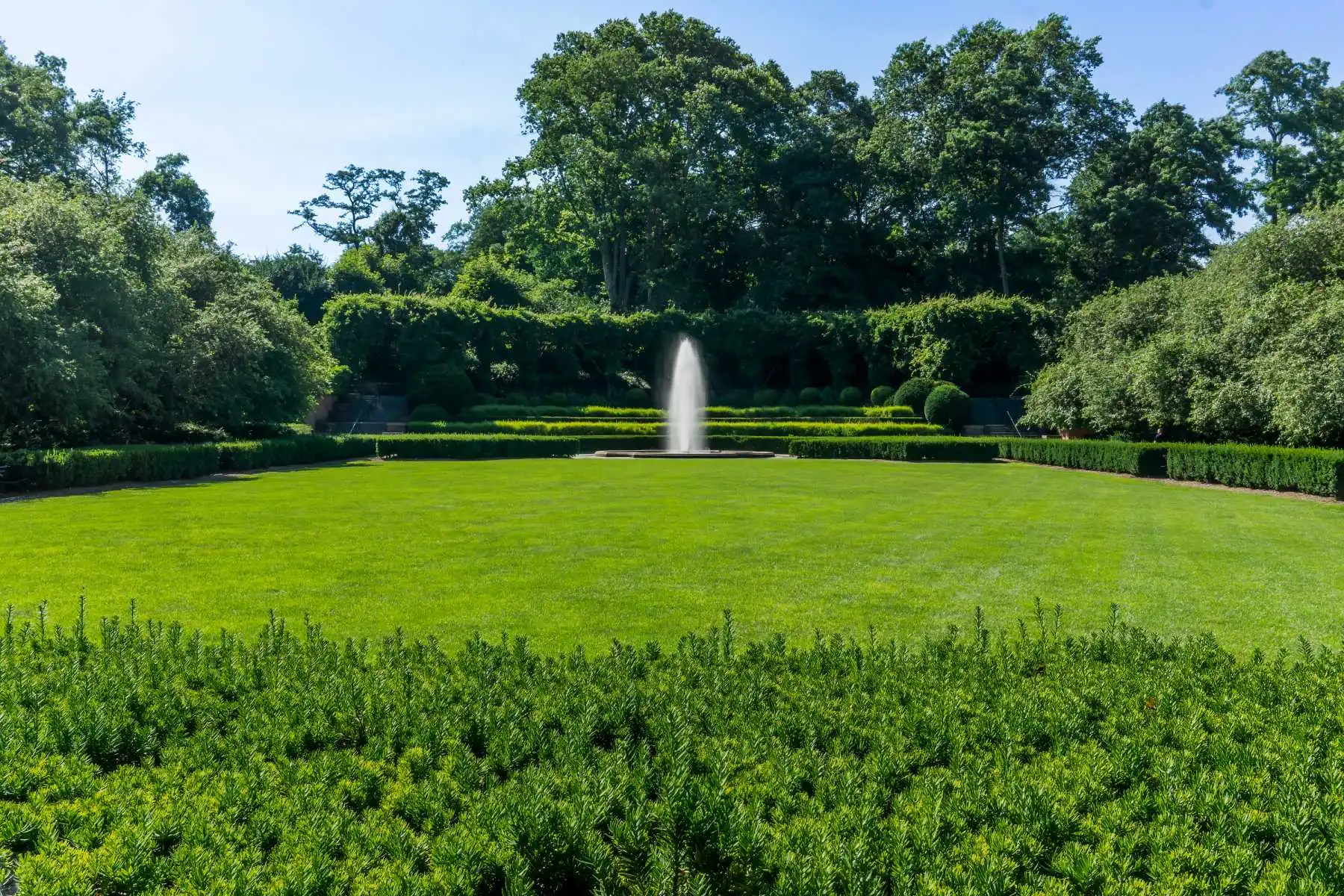
Central Park's only formal garden — six acres of geometric French, Italian, and English landscape design at the park's quietest northern end. The Italian central garden features a single fountain framed by yew hedges and a vine-covered pergola. The French garden has the Untermyer Fountain with the Three Dancing Maidens bronze. The English garden has the Secret Garden memorial fountain. All three styles are meticulously maintained year-round. Almost completely empty on weekday mornings even in peak season, making it the most peaceful spot in the park. Enter through the Vanderbilt Gate at 5th Avenue and 105th Street. Free. Open 8am–dusk.
Central Park's only formal garden — six acres of geometric French, Italian, and English landscape design at the park's quietest northern end. The Italian central garden features a single fountain framed by yew hedges and a vine-covered pergola. The French garden has the Untermyer Fountain with the Three Dancing Maidens bronze. The English garden has the Secret Garden memorial fountain. All three styles are meticulously maintained year-round. Almost completely empty on weekday mornings even in peak season, making it the most peaceful spot in the park. Enter through the Vanderbilt Gate at 5th Avenue and 105th Street. Free. Open 8am–dusk.
.webp)
The stone arch over The Pond at the park's southeast corner frames the single most-reproduced skyline view in Central Park: Midtown Manhattan's towers rising behind a small natural pond with the stone arch in the foreground. Built in 1896 from locally-quarried Manhattan schist. Featured in Home Alone 2 as the bridge where Kevin meets the Pigeon Lady. The best photography angle is standing on the southeast bank of The Pond looking northwest, with the bridge framing the Plaza Hotel and midtown towers behind it. Enter at 59th/60th Street and 5th Avenue. Open 24 hours. Free. Best shots: dawn or dusk.
The stone arch over The Pond at the park's southeast corner frames the single most-reproduced skyline view in Central Park: Midtown Manhattan's towers rising behind a small natural pond with the stone arch in the foreground. Built in 1896 from locally-quarried Manhattan schist. Featured in Home Alone 2 as the bridge where Kevin meets the Pigeon Lady. The best photography angle is standing on the southeast bank of The Pond looking northwest, with the bridge framing the Plaza Hotel and midtown towers behind it. Enter at 59th/60th Street and 5th Avenue. Open 24 hours. Free. Best shots: dawn or dusk.
.webp)
Four acres of woodland closed to the public for nearly 70 years before reopening in 2016. Inside, narrow gravel paths wind through native plants and around a small pond — all within a 5-minute walk of midtown's noise. On a busy summer Saturday, while half a million tourists pack the rest of the park, Hallett often has fewer than 20 people inside. The entrance gate is easy to walk past without noticing. Open April through November only. Walk-only, no bikes or pedicabs permitted. Free.
Four acres of woodland closed to the public for nearly 70 years before reopening in 2016. Inside, narrow gravel paths wind through native plants and around a small pond — all within a 5-minute walk of midtown's noise. On a busy summer Saturday, while half a million tourists pack the rest of the park, Hallett often has fewer than 20 people inside. The entrance gate is easy to walk past without noticing. Open April through November only. Walk-only, no bikes or pedicabs permitted. Free.
.webp)
Central Park's largest playground at 3 acres and the city's first public playground when it opened in 1926. Massive natural rock outcroppings kids can climb, modern equipment for all ages, sprinklers in summer, swings, slides, and an open sandbox. The natural rock features make it more interesting than a standard playground; kids 6 and up stay engaged for hours. Adjacent to ball fields if older children want to watch pickup softball. Open dawn to dusk. Sprinklers on in summer. Free.
Central Park's largest playground at 3 acres and the city's first public playground when it opened in 1926. Massive natural rock outcroppings kids can climb, modern equipment for all ages, sprinklers in summer, swings, slides, and an open sandbox. The natural rock features make it more interesting than a standard playground; kids 6 and up stay engaged for hours. Adjacent to ball fields if older children want to watch pickup softball. Open dawn to dusk. Sprinklers on in summer. Free.
.webp)
The 106-acre reservoir ringed by a 1.58-mile running path is one of the most popular jogging routes in New York City, offering unbroken 360-degree skyline views. Named for the former First Lady, who lived nearby on Fifth Avenue and jogged this path regularly until her death in 1994. The water is no longer used as a city drinking supply but the reservoir remains operational as part of NYC's water system. The running path is accessible from multiple park entrances. Free.
The 106-acre reservoir ringed by a 1.58-mile running path is one of the most popular jogging routes in New York City, offering unbroken 360-degree skyline views. Named for the former First Lady, who lived nearby on Fifth Avenue and jogged this path regularly until her death in 1994. The water is no longer used as a city drinking supply but the reservoir remains operational as part of NYC's water system. The running path is accessible from multiple park entrances. Free.
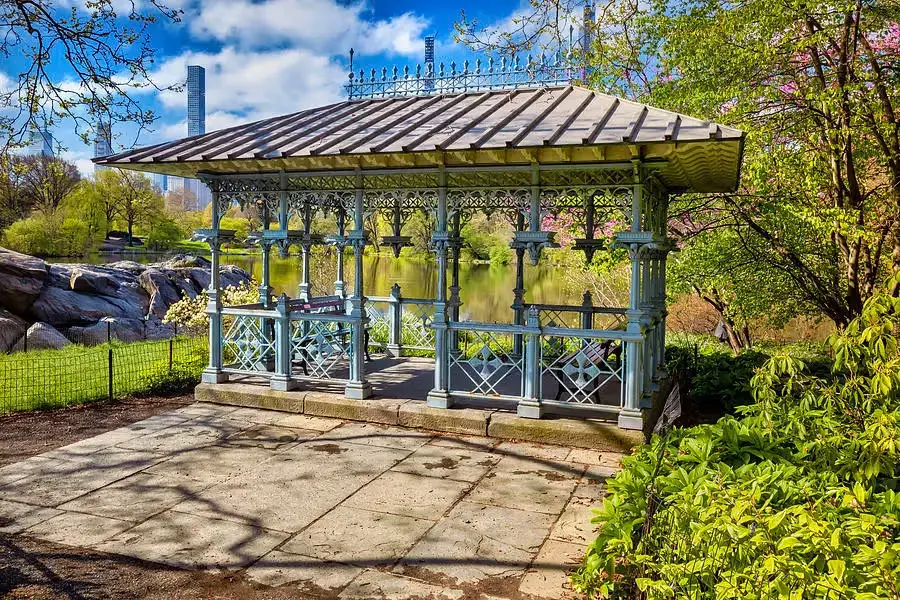
A filigreed Victorian cast-iron shelter on the rocky promontory of Hernshead, extending into the west side of the Lake. Built in 1871, originally sited at 59th Street and 7th Avenue as a shelter for visitors waiting for horse-drawn street cars. Relocated to its current position in 1912. One of the most overlooked romantic spots in the park — the pavilion extends over the water on three sides, the ironwork is among the most detailed in the park, and the view back toward the Lake and Bow Bridge is consistently excellent. Popular as a micro-wedding and proposal venue. Open 24 hours. Free.
A filigreed Victorian cast-iron shelter on the rocky promontory of Hernshead, extending into the west side of the Lake. Built in 1871, originally sited at 59th Street and 7th Avenue as a shelter for visitors waiting for horse-drawn street cars. Relocated to its current position in 1912. One of the most overlooked romantic spots in the park — the pavilion extends over the water on three sides, the ironwork is among the most detailed in the park, and the view back toward the Lake and Bow Bridge is consistently excellent. Popular as a micro-wedding and proposal venue. Open 24 hours. Free.
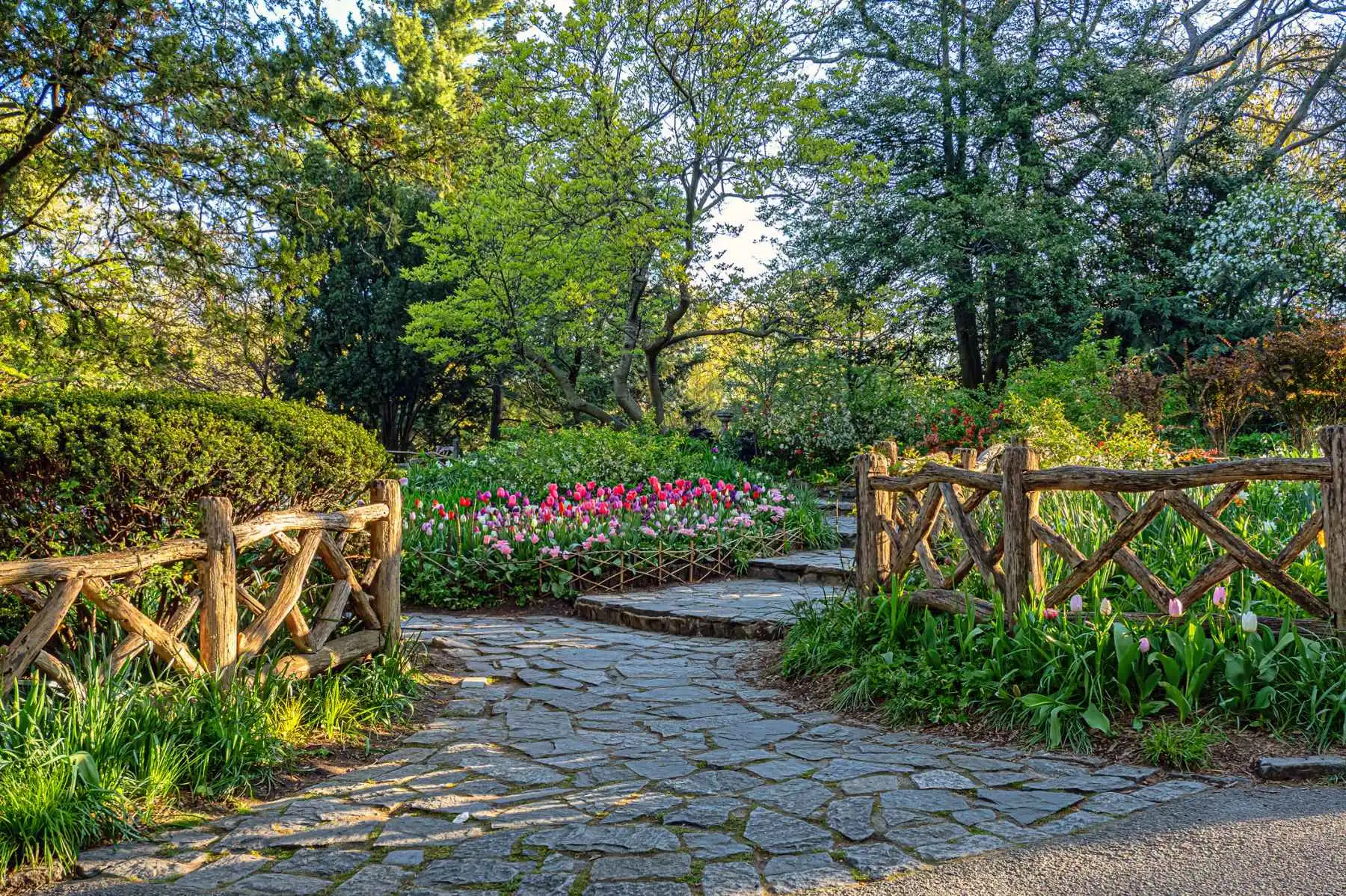
A four-acre garden planted exclusively with flowers, herbs, and plants mentioned in Shakespeare's plays. Bronze plaques throughout quote the relevant passages — rosemary for remembrance from Hamlet, the bank where the wild thyme blows from A Midsummer Night's Dream. Designed in 1916 to mark the 300th anniversary of Shakespeare's death. Adjacent to the Whisper Bench: a curved stone seat where two people at opposite ends can hear each other whisper clearly, even in a crowded park. Between Belvedere Castle and the Delacorte Theater. Open dawn to dusk. Free. Peak bloom: late May and early June.
A four-acre garden planted exclusively with flowers, herbs, and plants mentioned in Shakespeare's plays. Bronze plaques throughout quote the relevant passages — rosemary for remembrance from Hamlet, the bank where the wild thyme blows from A Midsummer Night's Dream. Designed in 1916 to mark the 300th anniversary of Shakespeare's death. Adjacent to the Whisper Bench: a curved stone seat where two people at opposite ends can hear each other whisper clearly, even in a crowded park. Between Belvedere Castle and the Delacorte Theater. Open dawn to dusk. Free. Peak bloom: late May and early June.
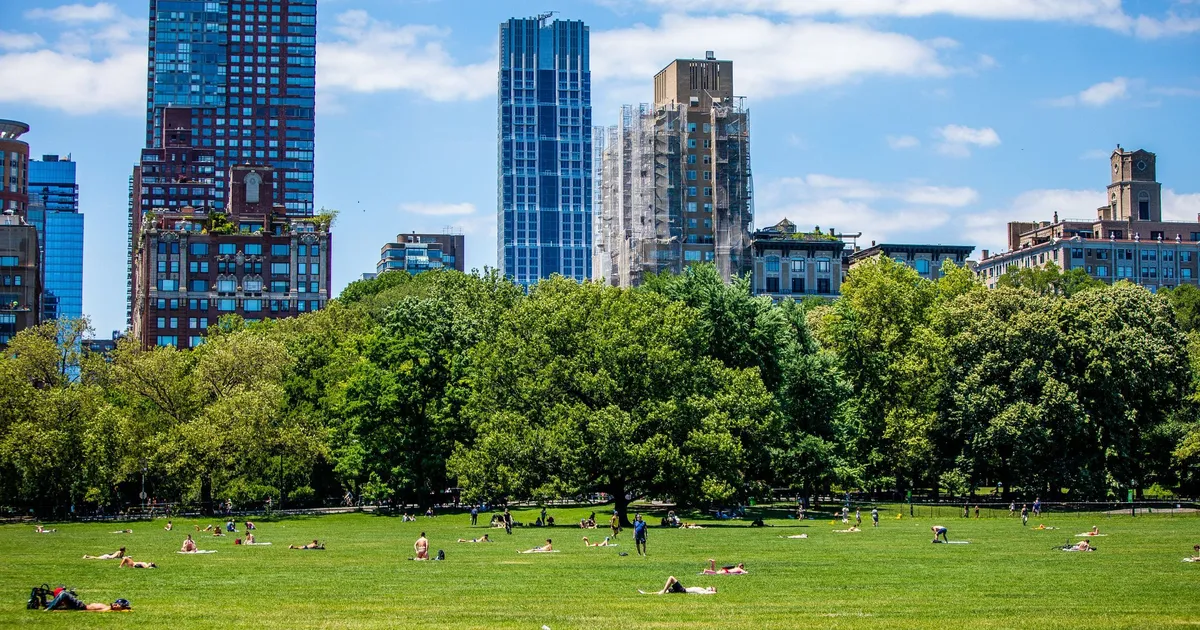
Fifteen acres of open lawn that, until 1934, was actually home to a flock of Southdown sheep — part of the park's original pastoral design. Today it's Manhattan's version of a public beach: picnics, sunbathing, frisbee, and people-watching at scale. Officially designated a "quiet area" by the Central Park Conservancy — no organized sports, no dogs, and no amplified music allowed. The view from the southern edge looking up at the skyline behind Tavern on the Green and the San Remo towers is one of the most quietly spectacular in the city. Open May–October. Free.
Fifteen acres of open lawn that, until 1934, was actually home to a flock of Southdown sheep — part of the park's original pastoral design. Today it's Manhattan's version of a public beach: picnics, sunbathing, frisbee, and people-watching at scale. Officially designated a "quiet area" by the Central Park Conservancy — no organized sports, no dogs, and no amplified music allowed. The view from the southern edge looking up at the skyline behind Tavern on the Green and the San Remo towers is one of the most quietly spectacular in the city. Open May–October. Free.
.jpg)
John Lennon's memorial sits across Central Park West from The Dakota, the apartment building where he lived and was killed in December 1980. The black-and-white "IMAGINE" mosaic at its center is a constant gathering point — flowers, candles, and street musicians appear every single day. On his birthday (October 9) and the anniversary of his death (December 8), the crowds run thousands deep and stretch back through the park. The memorial was designed by Lennon's wife Yoko Ono and opened in 1985. Best time to visit: weekday mornings when it's quietest and the mosaic is most visible.
John Lennon's memorial sits across Central Park West from The Dakota, the apartment building where he lived and was killed in December 1980. The black-and-white "IMAGINE" mosaic at its center is a constant gathering point — flowers, candles, and street musicians appear every single day. On his birthday (October 9) and the anniversary of his death (December 8), the crowds run thousands deep and stretch back through the park. The memorial was designed by Lennon's wife Yoko Ono and opened in 1985. Best time to visit: weekday mornings when it's quietest and the mosaic is most visible.
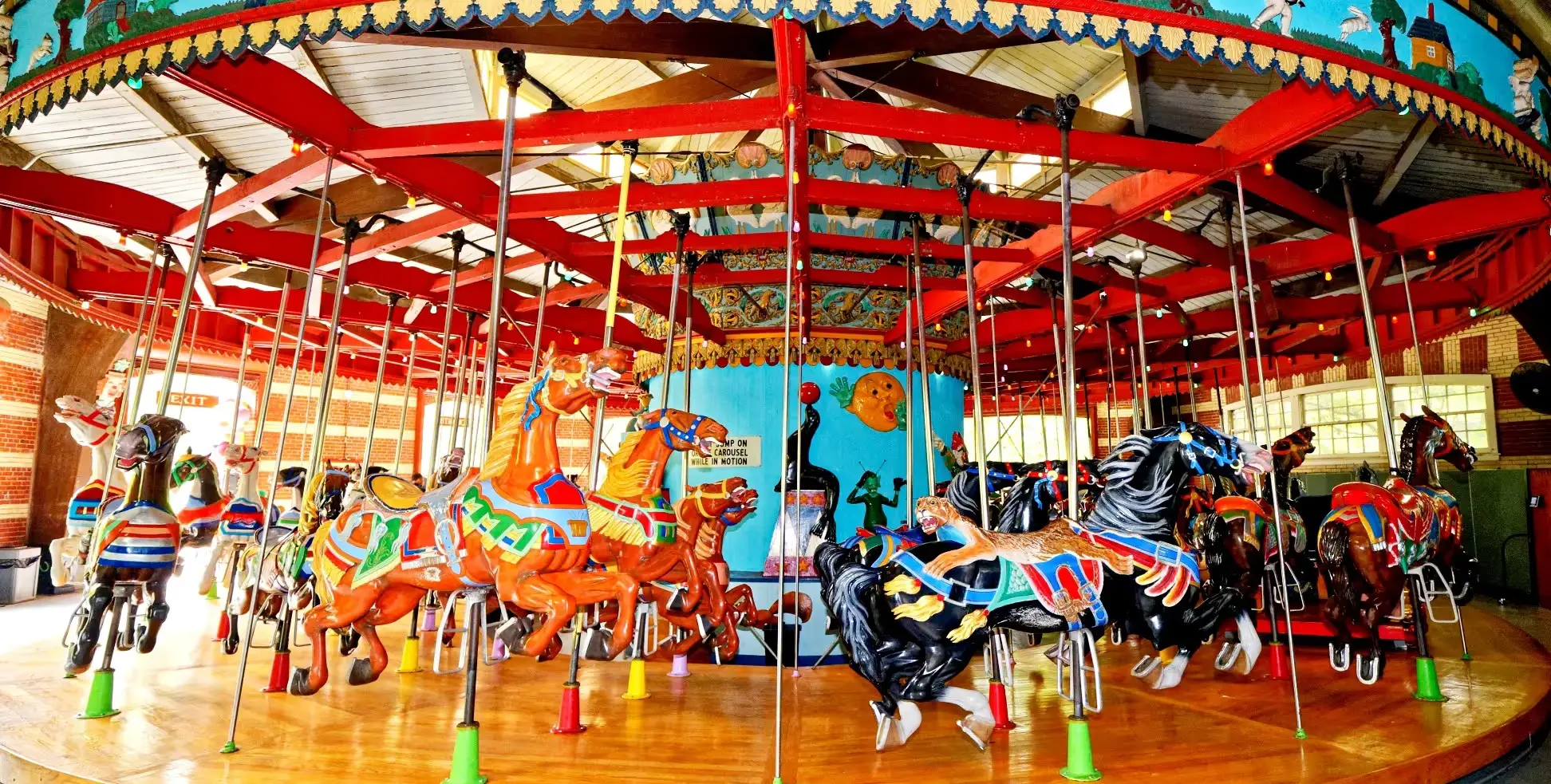
57 hand-carved horses on a 1908 carousel originally from Coney Island, relocated to Central Park in 1951. One of the largest antique carousels in the country and the same carousel Holden Caulfield describes watching in J.D. Salinger's The Catcher in the Rye. A 3-minute ride costs $3.50. Even adults ride it — the hand-painted wooden horses, mirrored center panels, and original Wurlitzer band organ make this feel more like time travel than an amusement attraction. The band organ plays continuously and can be heard from 50 yards in every direction. Open 10am–6pm in season. Weekends only in winter.
57 hand-carved horses on a 1908 carousel originally from Coney Island, relocated to Central Park in 1951. One of the largest antique carousels in the country and the same carousel Holden Caulfield describes watching in J.D. Salinger's The Catcher in the Rye. A 3-minute ride costs $3.50. Even adults ride it — the hand-painted wooden horses, mirrored center panels, and original Wurlitzer band organ make this feel more like time travel than an amusement attraction. The band organ plays continuously and can be heard from 50 yards in every direction. Open 10am–6pm in season. Weekends only in winter.
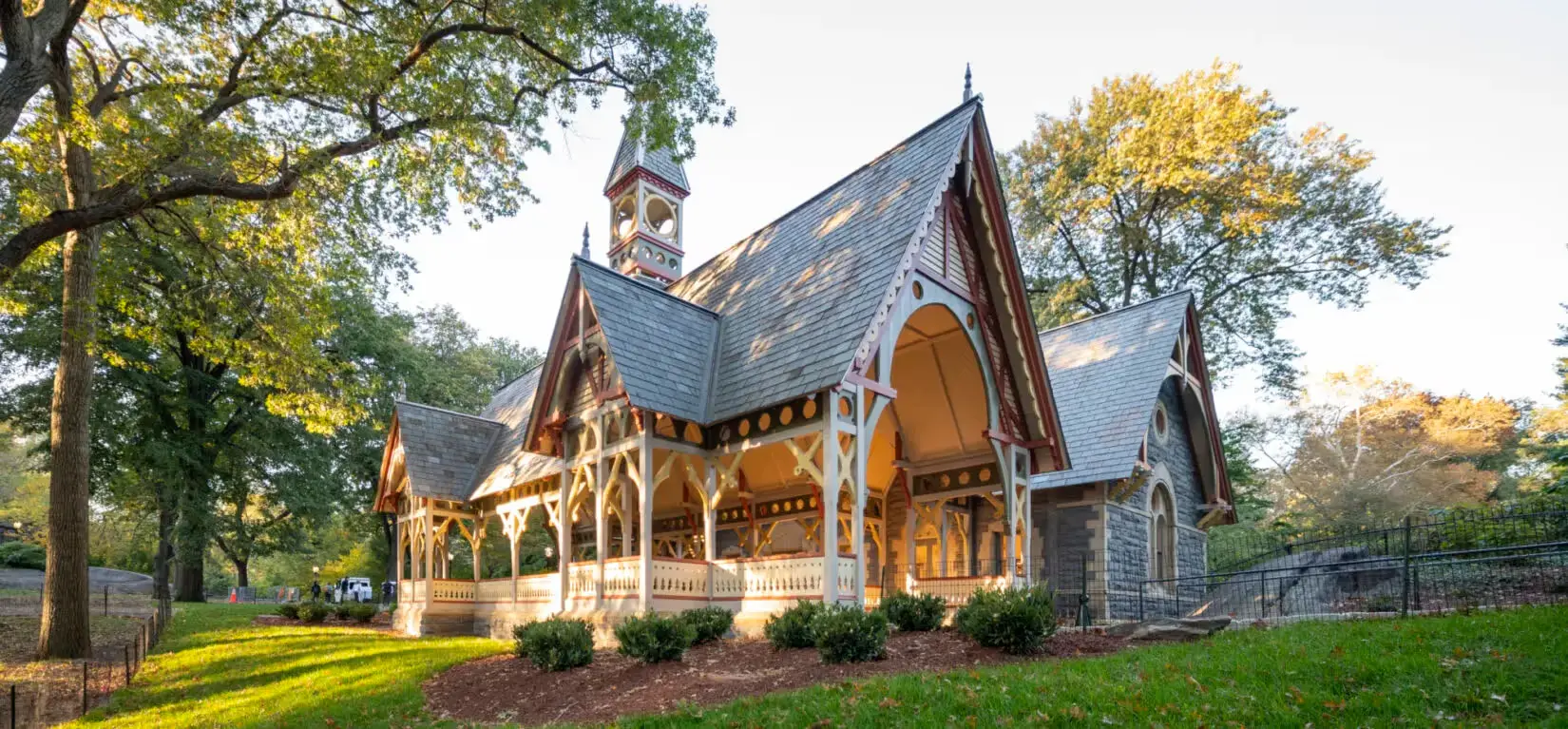
A Gothic Revival cottage built in 1870 as part of Calvert Vaux's original park design, originally serving fresh milk to children of poorer families — an early experiment in urban public health. After decades of neglect it was restored in 1979 and now serves as the park's official visitor center. Pick up paper maps, ask rangers for route advice, and check posted schedules for free events, guided ranger walks, and seasonal programming. Open Tuesday–Sunday, hours vary seasonally. Free.
A Gothic Revival cottage built in 1870 as part of Calvert Vaux's original park design, originally serving fresh milk to children of poorer families — an early experiment in urban public health. After decades of neglect it was restored in 1979 and now serves as the park's official visitor center. Pick up paper maps, ask rangers for route advice, and check posted schedules for free events, guided ranger walks, and seasonal programming. Open Tuesday–Sunday, hours vary seasonally. Free.
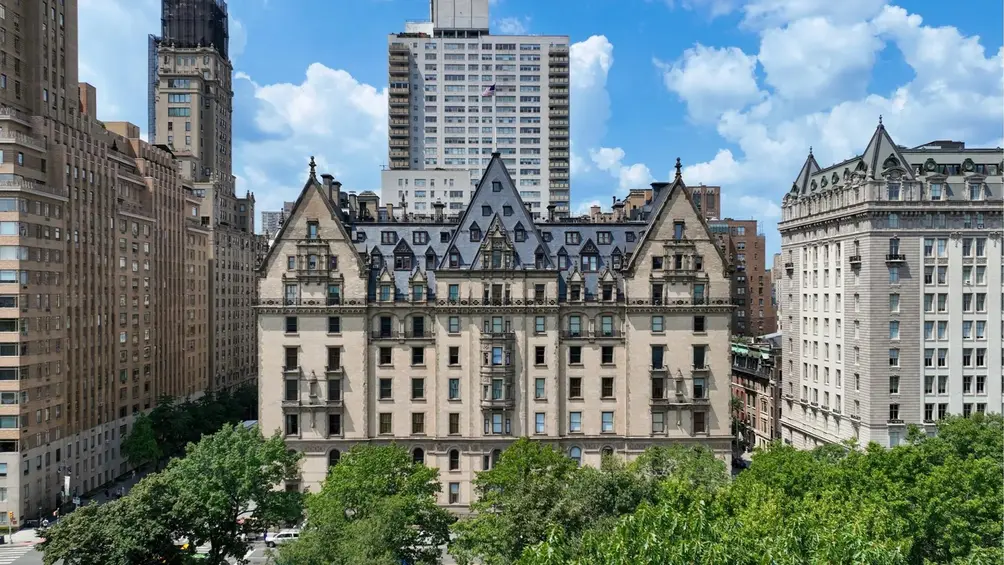
The 1884 Gothic Revival apartment building where John Lennon lived and was shot on December 8, 1980. Directly opposite Strawberry Fields. The name "Dakota" was given because the building was so far north of the city at the time that colleagues joked it might as well be in the Dakota Territory. Filming location for Roman Polanski's Rosemary's Baby (1968). The building remains a private residential address with no public access, but the exterior courtyard archway and facade are fully visible from the sidewalk. Free to view, open 24 hours from street level.
The 1884 Gothic Revival apartment building where John Lennon lived and was shot on December 8, 1980. Directly opposite Strawberry Fields. The name "Dakota" was given because the building was so far north of the city at the time that colleagues joked it might as well be in the Dakota Territory. Filming location for Roman Polanski's Rosemary's Baby (1968). The building remains a private residential address with no public access, but the exterior courtyard archway and facade are fully visible from the sidewalk. Free to view, open 24 hours from street level.
.webp)
55 acres of open green between Belvedere Castle and the Jacqueline Kennedy Onassis Reservoir — the picnic capital of Manhattan and the site of Central Park's most famous concerts, including Simon & Garfunkel (1981, 500,000 attendees), Diana Ross (1983), and the Global Citizen Festival every September. Restored in 1997 at a cost of $18 million. Closed in wet weather and winter to protect the turf. Eight softball fields on the perimeter are in active use every weekend spring through fall. Open daily subject to conditions. Free.
55 acres of open green between Belvedere Castle and the Jacqueline Kennedy Onassis Reservoir — the picnic capital of Manhattan and the site of Central Park's most famous concerts, including Simon & Garfunkel (1981, 500,000 attendees), Diana Ross (1983), and the Global Citizen Festival every September. Restored in 1997 at a cost of $18 million. Closed in wet weather and winter to protect the turf. Eight softball fields on the perimeter are in active use every weekend spring through fall. Open daily subject to conditions. Free.
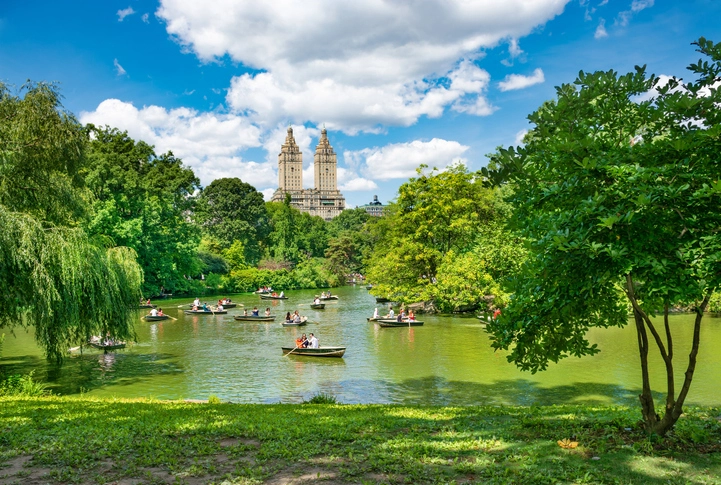
The 22-acre Lake at the heart of Central Park was excavated in the 1850s as part of Olmsted and Vaux's original design. Rowboat rentals are available at the Loeb Boathouse on the east bank ($20 per hour) — paddling out to Bow Bridge gives you the most romantic angle of the bridge that you can't get from shore. The Loeb Boathouse has historically housed one of Central Park's best-known restaurants, currently closed for refurbishment; check current status before visiting. The Lake is also the filming location for the rowing scene in The Notebook. Rowboat rentals: seasonal, typically April through October.
The 22-acre Lake at the heart of Central Park was excavated in the 1850s as part of Olmsted and Vaux's original design. Rowboat rentals are available at the Loeb Boathouse on the east bank ($20 per hour) — paddling out to Bow Bridge gives you the most romantic angle of the bridge that you can't get from shore. The Loeb Boathouse has historically housed one of Central Park's best-known restaurants, currently closed for refurbishment; check current status before visiting. The Lake is also the filming location for the rowing scene in The Notebook. Rowboat rentals: seasonal, typically April through October.
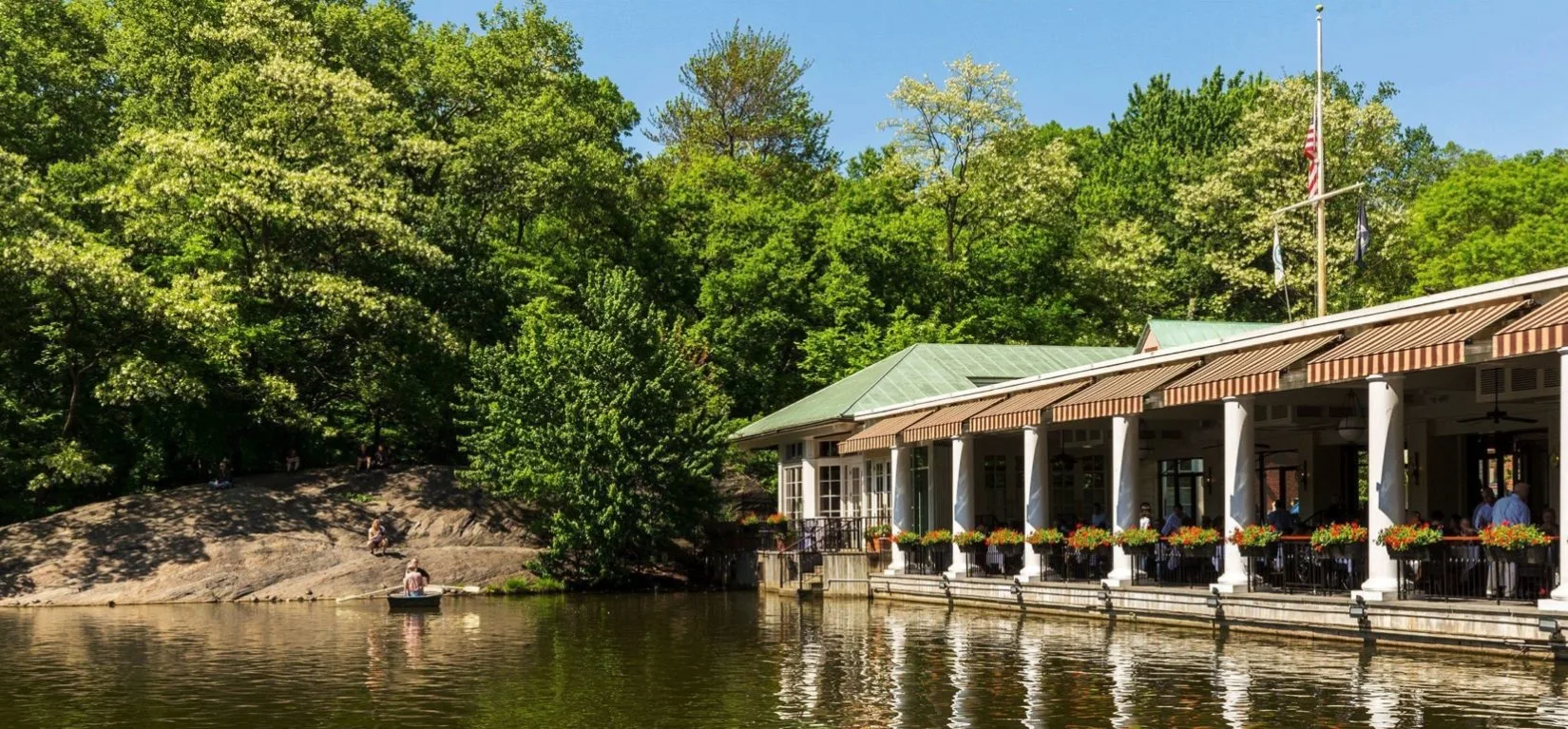
The boathouse on the east bank of the Lake offers rowboat rentals from spring through fall ($20 per hour plus deposit) — the classic way to see Bow Bridge, Cherry Hill, and the Upper West Side skyline from the water. The attached restaurant, a long-standing Central Park landmark known for weekend brunch, is currently closed for refurbishment; check the Central Park Conservancy website for reopening dates before planning a dining visit. A popular kayak launch point and a peaceful waterside stop even if you don't rent a boat. Seasonal hours.
The boathouse on the east bank of the Lake offers rowboat rentals from spring through fall ($20 per hour plus deposit) — the classic way to see Bow Bridge, Cherry Hill, and the Upper West Side skyline from the water. The attached restaurant, a long-standing Central Park landmark known for weekend brunch, is currently closed for refurbishment; check the Central Park Conservancy website for reopening dates before planning a dining visit. A popular kayak launch point and a peaceful waterside stop even if you don't rent a boat. Seasonal hours.
.webp)
The only intentionally straight path in Central Park — a quarter-mile promenade of American elms forming a cathedral-like canopy overhead. The only place in North America with such a large stand of mature American elms, all planted in the 1860s. The southern end is Literary Walk, lined with bronze statues of Shakespeare, Robert Burns, Sir Walter Scott, and other writers. The northern end leads directly to Bethesda Terrace, making this the park's central spine. Featured in countless films because the elm canopy photographs like nowhere else in the city. Most photogenic in autumn when the leaves turn gold.
The only intentionally straight path in Central Park — a quarter-mile promenade of American elms forming a cathedral-like canopy overhead. The only place in North America with such a large stand of mature American elms, all planted in the 1860s. The southern end is Literary Walk, lined with bronze statues of Shakespeare, Robert Burns, Sir Walter Scott, and other writers. The northern end leads directly to Bethesda Terrace, making this the park's central spine. Featured in countless films because the elm canopy photographs like nowhere else in the city. Most photogenic in autumn when the leaves turn gold.
.webp)
One of the world's great art museums — two million works across Egyptian antiquities, European paintings, American decorative arts, arms and armor, musical instruments, and dozens of other departments. The Met sits inside Central Park's eastern boundary, making it technically part of the park's footprint. The grand staircase at the 5th Avenue entrance is one of the most photographed spots in New York regardless of whether you have a museum ticket. Plan a minimum of 3 hours for a meaningful visit; the collection rewards full-day visits. Open Thursday–Monday. Adult $30, Students $17, under-12 free.
One of the world's great art museums — two million works across Egyptian antiquities, European paintings, American decorative arts, arms and armor, musical instruments, and dozens of other departments. The Met sits inside Central Park's eastern boundary, making it technically part of the park's footprint. The grand staircase at the 5th Avenue entrance is one of the most photographed spots in New York regardless of whether you have a museum ticket. Plan a minimum of 3 hours for a meaningful visit; the collection rewards full-day visits. Open Thursday–Monday. Adult $30, Students $17, under-12 free.
.webp)
36 acres of intentionally wild woodland, designed to feel like Adirondack forest in the middle of Manhattan. Winding dirt paths cross streams, hidden bridges, and rocky outcrops. The best birdwatching spot in New York City — over 230 species recorded annually during spring migration. Intentionally designed by Olmsted to disorient visitors and create a sense of true wilderness. Pull out your phone for the map only if you really need to. Daylight hours recommended. Walk-only, no bikes or pedicabs permitted. Free.
36 acres of intentionally wild woodland, designed to feel like Adirondack forest in the middle of Manhattan. Winding dirt paths cross streams, hidden bridges, and rocky outcrops. The best birdwatching spot in New York City — over 230 species recorded annually during spring migration. Intentionally designed by Olmsted to disorient visitors and create a sense of true wilderness. Pull out your phone for the map only if you really need to. Daylight hours recommended. Walk-only, no bikes or pedicabs permitted. Free.
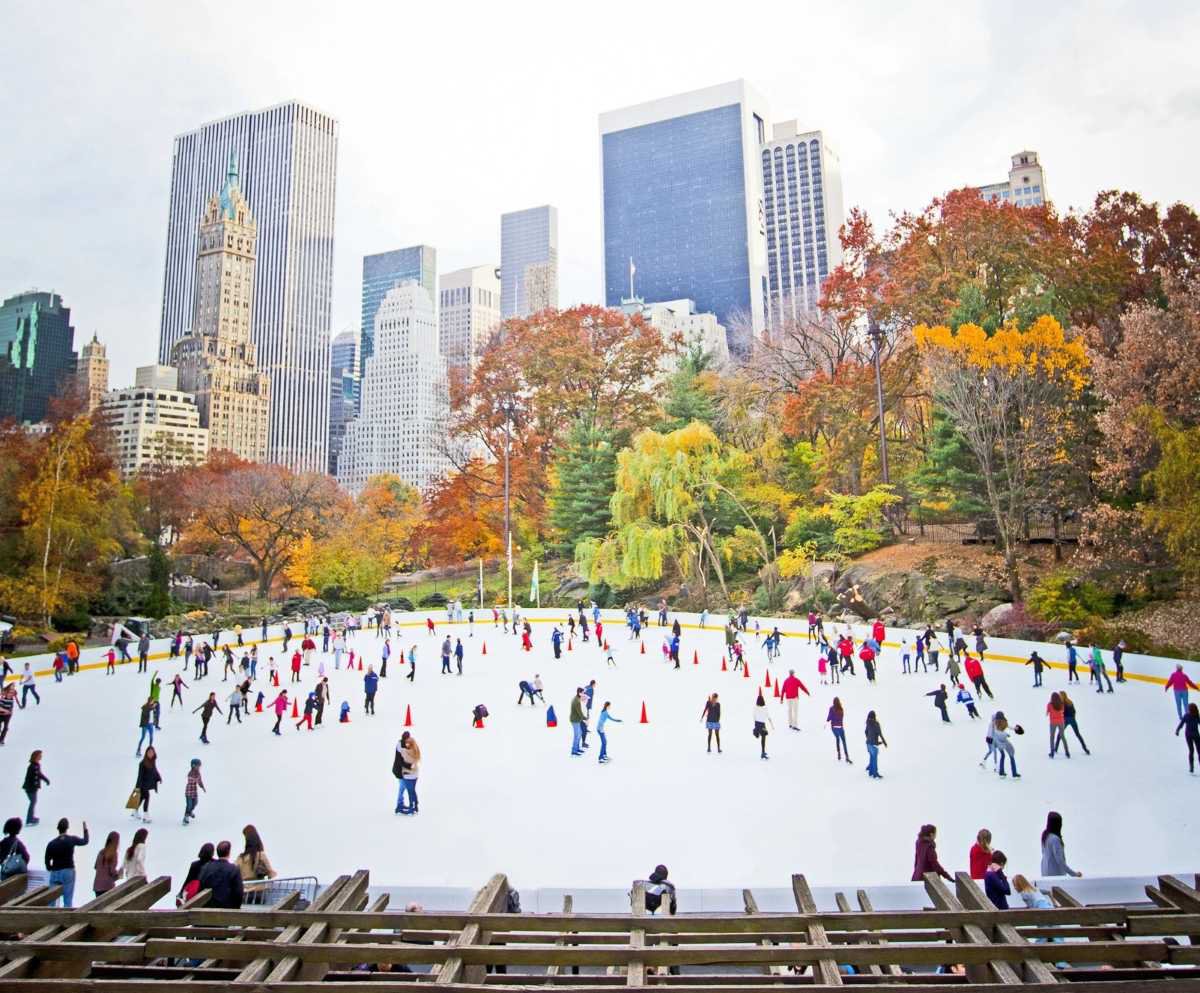
The ice skating rink Kevin McCallister visits in Home Alone 2: Lost in New York. Open since 1949 — converts to a small amusement park (Victorian Gardens) in summer. The view from here looking up at the midtown skyline is one of the most overlooked panoramas in the park; you're standing at the only angle where the buildings of 59th Street form a complete unbroken wall above the trees. Ice skating open October through April. Skate rental approximately $15.
The ice skating rink Kevin McCallister visits in Home Alone 2: Lost in New York. Open since 1949 — converts to a small amusement park (Victorian Gardens) in summer. The view from here looking up at the midtown skyline is one of the most overlooked panoramas in the park; you're standing at the only angle where the buildings of 59th Street form a complete unbroken wall above the trees. Ice skating open October through April. Skate rental approximately $15.
Central Park has 20 entrances spanning 59th to 110th Street. The most-used subway stops: 59th St/Columbus Circle (A, B, C, D, 1) for the southwest; 5th Ave/59th St (N, R, W) for the southeast and Gapstow Bridge; 72nd Street (B, C) for Strawberry Fields, Bethesda, and Bow Bridge; 86th Street (B, C or 4, 5, 6) for Belvedere Castle and the Great Lawn; 103rd/110th Street (6) for Conservatory Garden. From most Midtown hotels, the southern entrances are 10–15 minutes on foot.
Spring (April–May): Cherry blossoms, magnolias, peak Conservatory Garden bloom. Mid-April is the most photogenic two weeks of the year. Summer (June–August): Free Shakespeare in the Park at the Delacorte Theater, SummerStage concerts, rowboats on the Lake. Fall (October–November): Peak foliage — Bow Bridge, The Mall, and Gapstow Bridge look their best. Winter (December–March): Quietest time; Wollman Rink ice skating, holiday markets, post-snowfall silence.
The minimum for a meaningful visit is 2 hours: Columbus Circle → Bethesda Terrace → Bow Bridge → 79th Street exit. To see all the iconic landmarks at your own pace, plan 3–4 hours. To add hidden spots, the north park, and Conservatory Garden, plan a full day. A guided pedicab tour covers more attractions in 60 minutes than most visitors see in three hours of walking.
Self-guided works well if you have time to wander and like getting slightly lost. The trip planner above builds you a route. Guided works better if you're short on time, want context behind what you're seeing, or want access to spots most visitors miss. The walking tour is the only way to access The Ramble, Hallett Sanctuary, and Shakespeare's Garden with a knowledgeable guide. Most visitors who book a tour say they wish they'd booked one sooner — not the other way around.