Most people who visit the 9/11 Memorial walk through the Oculus twice — once on the way in, once on the way out — and never learn what it is, why it's shaped like that, or that its roof opens for exactly 102 minutes one morning a year.
This is the short version of what it is, what Santiago Calatrava was going for, what's underneath it, where to stand for the photo everyone takes, and how it fits between the memorial pools and the museum. It takes about fifteen minutes to see properly, and it's free.
What is the Oculus?
The Oculus is the white, winged building in the middle of the World Trade Center site — the one that looks like a skeleton, or a bird, depending on the angle. Officially it's the World Trade Center Transportation Hub: the station for PATH trains to New Jersey and a connection point for a dozen subway lines, with a shopping concourse underneath. It opened in March 2016, was designed by the Spanish architect Santiago Calatrava, and cost around $4 billion, which made it the most expensive train station ever built.
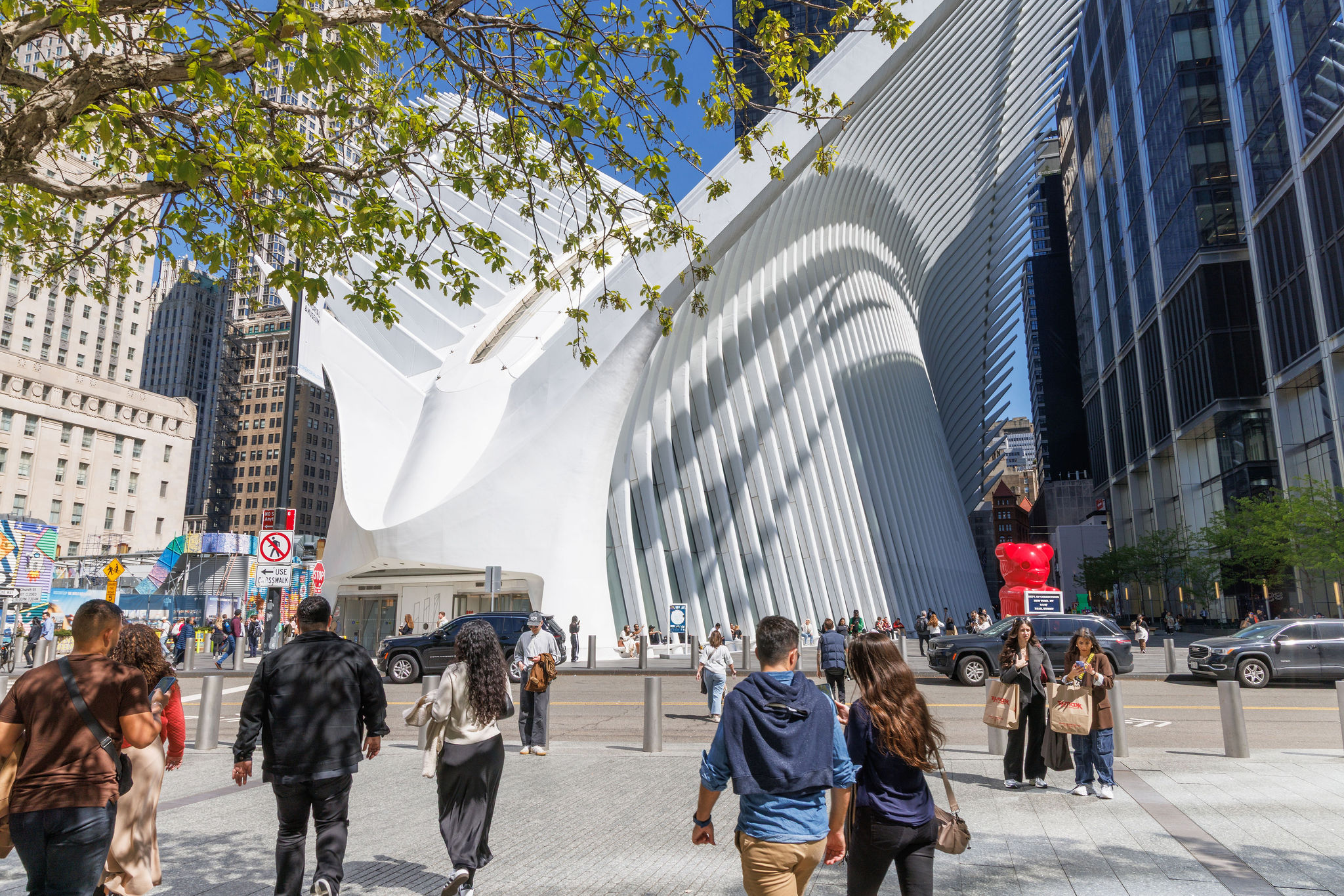
It's free to enter, open daily, and sits between the 9/11 Memorial pools and the Fulton Street subway complex, so nearly everyone visiting Ground Zero walks through it whether they meant to or not. This guide covers why it looks the way it does, what's actually inside, where to stand for the photo, and how it fits with the memorial and museum next door.
Why it looks like that: the dove, the ribs, and the Way of Light
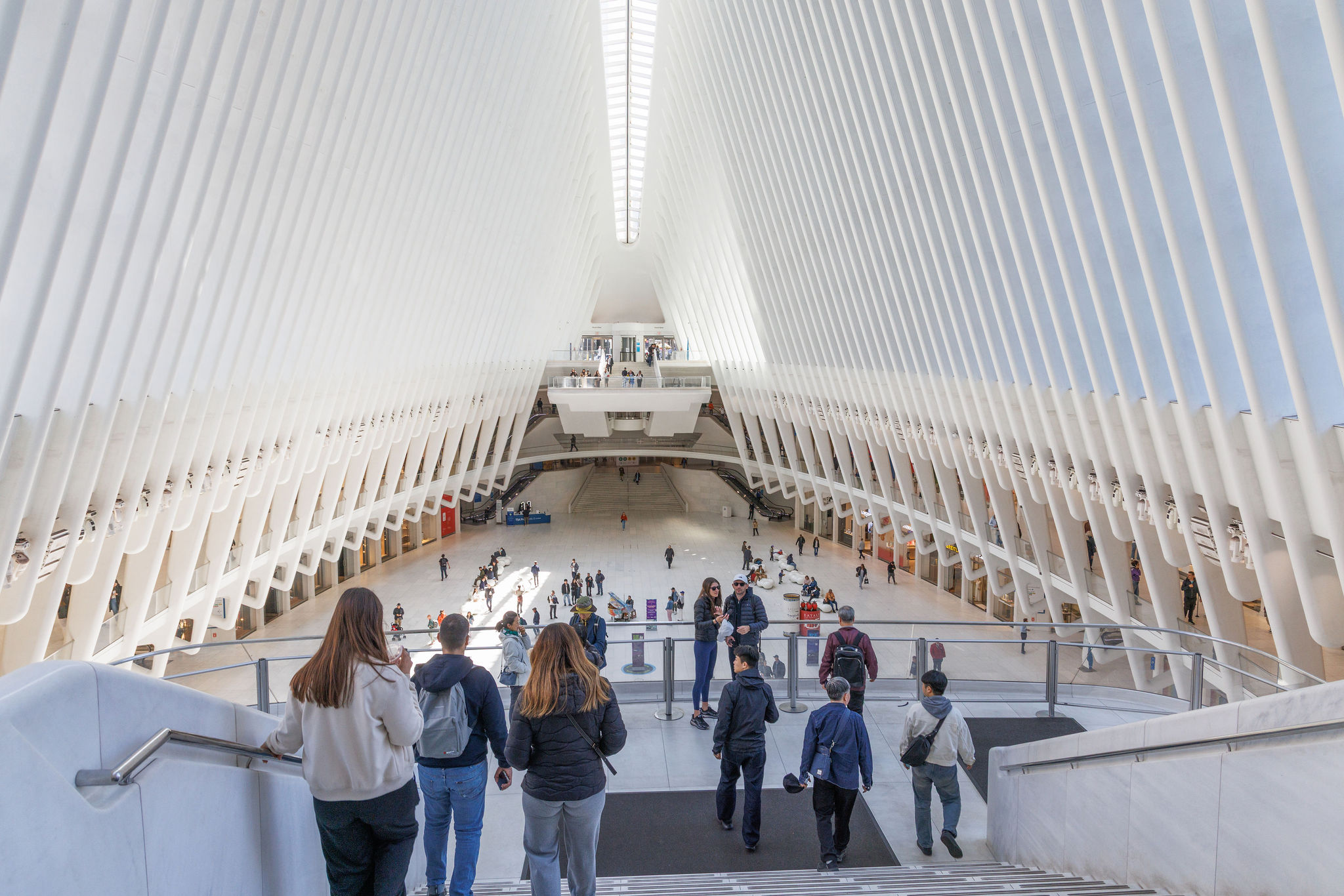
Calatrava's stated idea was a bird being released from a child's hands — the two rows of white steel ribs are wings, the skylight down the middle is the spine, and the whole thing is meant to be caught at the moment of lifting off. The ribs continue underground and become the structure of the main hall, so from inside you're looking at the same skeleton from beneath.
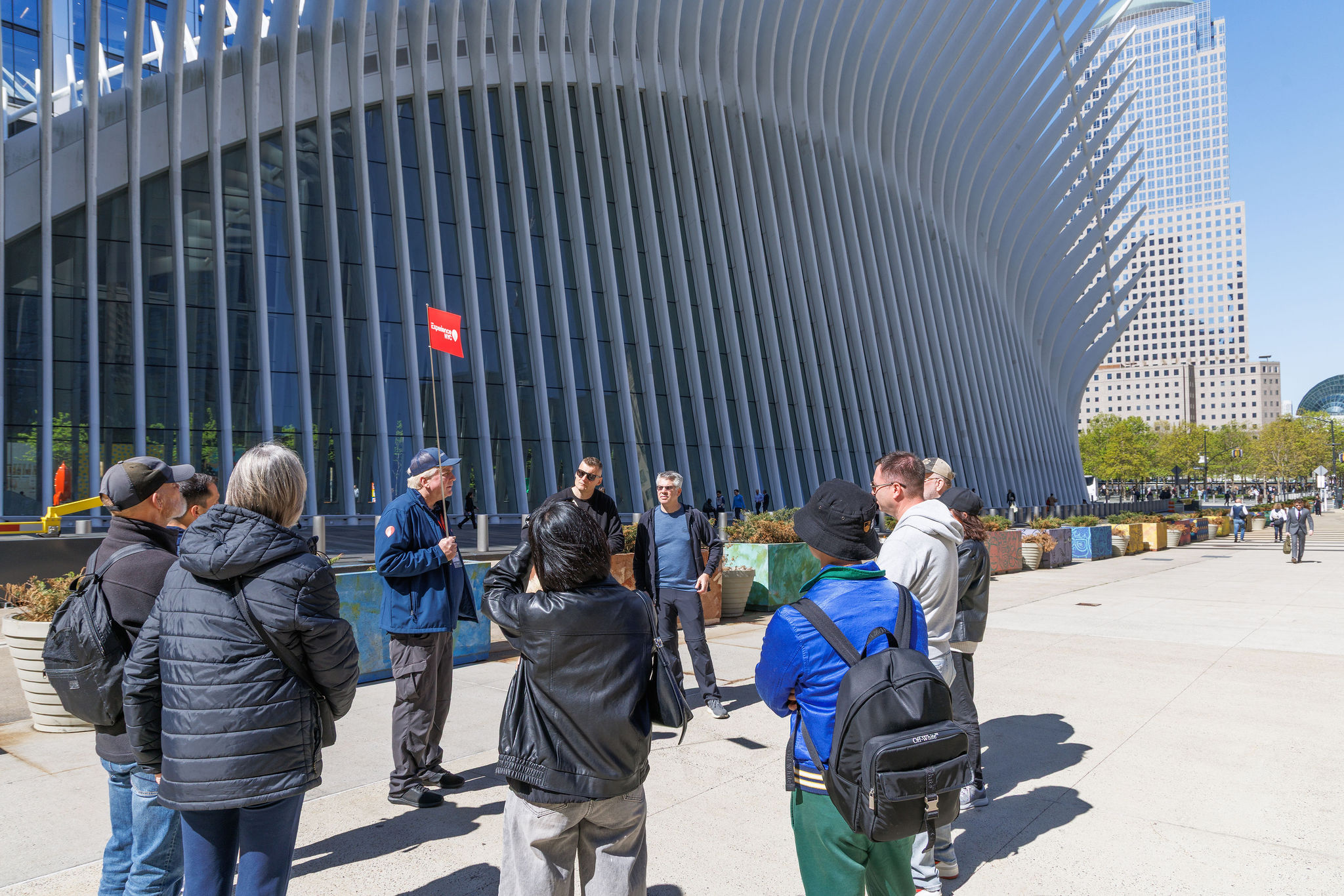
The skylight is the detail most visitors miss. It's about 330 feet long, and on September 11 each year it opens — the panels retract for 102 minutes, from 8:46 a.m., when the first plane hit, to 10:28 a.m., when the North Tower fell. It's built so that at 10:28 the sun falls straight through and lays a single band of light across the marble floor. The architect called it the Way of Light. On any other day it's a closed strip of glass; on that one morning it's the reason the building faces the way it does.
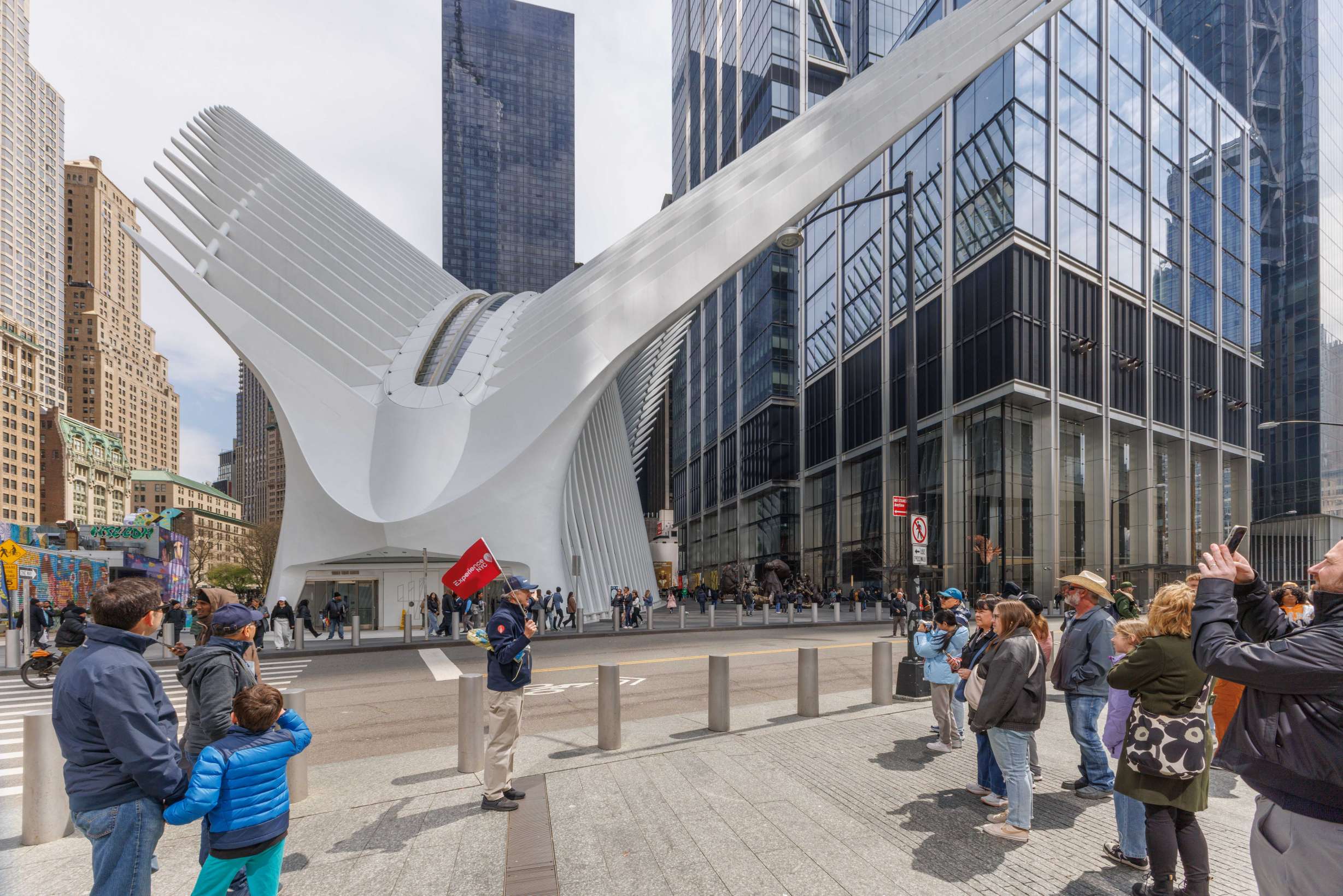
The design was controversial for years — it opened a decade late and at roughly twice its original budget, and critics argued a train station didn't need to be a cathedral. Now that it's built, most people who walk in stop talking for a second, which is about the best review a building can get.
What's inside: PATH, subway connections, and the shopping concourse
Underneath the main hall is a working transit hub. PATH trains run to Hoboken, Jersey City, and Newark. Underground passages connect to the R and W at Cortlandt Street, the E at World Trade Center, the 1 at WTC Cortlandt, and — via a long corridor east — the A, C, J, Z, 2, 3, 4, and 5 at Fulton Center. Another passage runs west to Brookfield Place and the Hudson River. You can cross most of Lower Manhattan down here without going outside, which is worth knowing in January.
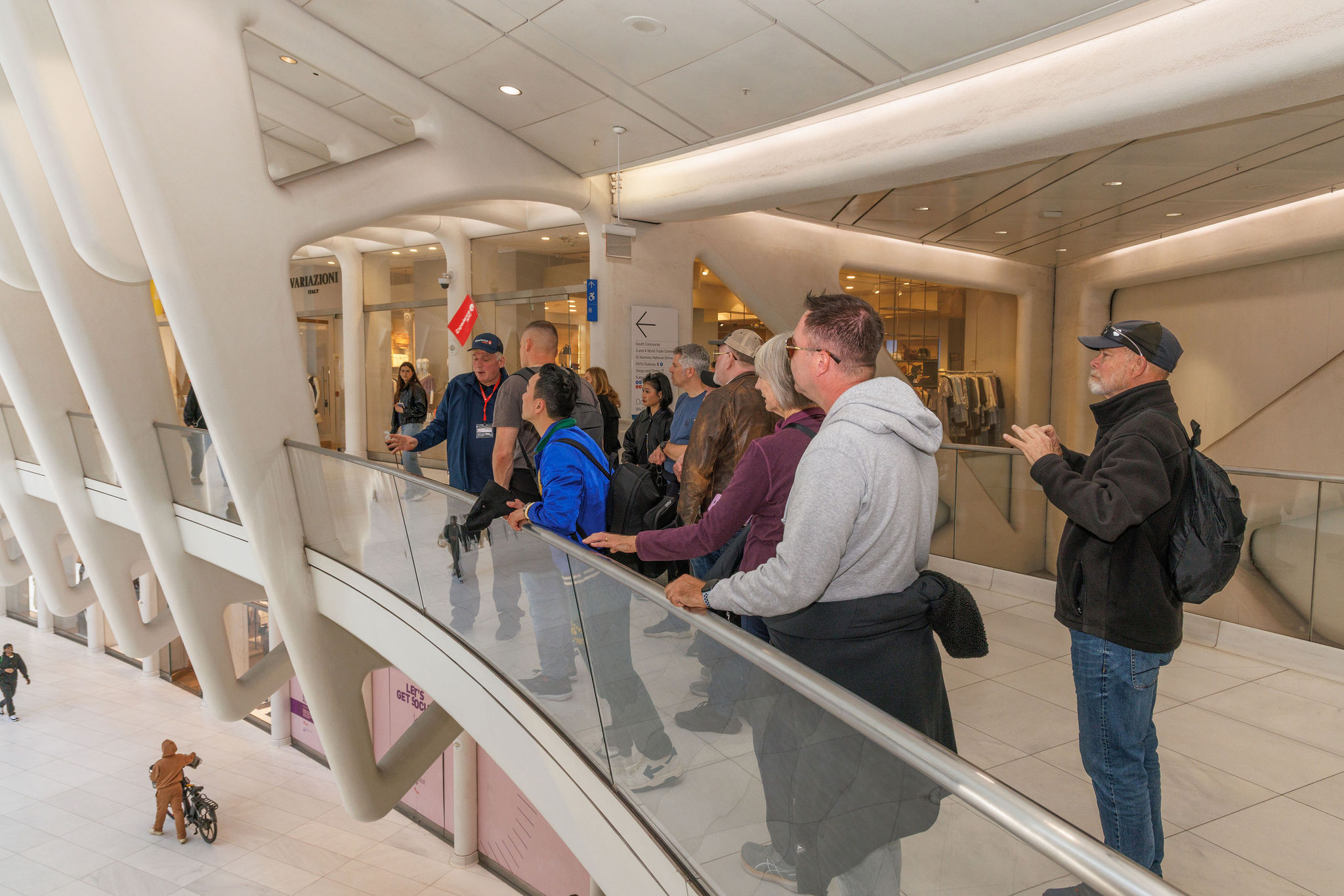
Around the hub is the Westfield World Trade Center shopping concourse — roughly a hundred stores, including an Apple Store, plus food. It's a mall, and it looks like one; the reason to come is the hall above it, not the shops. That said, it has clean restrooms, coffee, and air conditioning, all of which are in short supply at the memorial plaza next door.
The main hall itself is the thing. The floor is a single sweep of white Italian marble, deliberately left empty, and the ribs rise on both sides to meet at the skylight. Look up and you're standing inside the bird.
The best photo of the Oculus, and the best time to take it
Everyone takes the same photo and it's still the right one: from the balcony at either end of the main hall, looking down the length of the ribs. Stand on the mezzanine level, put the skylight in the middle of the frame, and shoot wide — a phone's wide-angle lens works. The symmetry does the rest.
.webp)
For the hall to look empty, go early. Before 9 a.m. on a weekend the floor is nearly clear; on weekday mornings it's full of commuters, which makes a different but also good picture. Midday light comes straight down through the skylight and washes the white out; late afternoon is softer.
From outside, the classic angle is from Church Street looking west across the plaza, where the wings frame One World Trade Center behind them. At night the hall is lit from inside and glows through the ribs; it photographs well from the memorial plaza side after dark.
How to get there, hours, and what it costs
The Oculus is free. There's no ticket to enter the main hall or the concourse; you only pay if you're riding PATH or the subway.
It's open every day, and the main hall stays accessible around the clock as a station. The shops keep normal retail hours — roughly 10 a.m. to 8 p.m., shorter on Sundays.
To get there: take the R or W to Cortlandt Street or the E to World Trade Center, both of which exit straight into the hall. The 1 to WTC Cortlandt is a short passage away, and the A, C, J, Z, 2, 3, 4, 5 to Fulton Street connect underground. The street address is roughly Church Street at Fulton Street; if you're walking from the memorial pools, it's the white building to the east.
The Oculus and the 9/11 Memorial: how they fit together
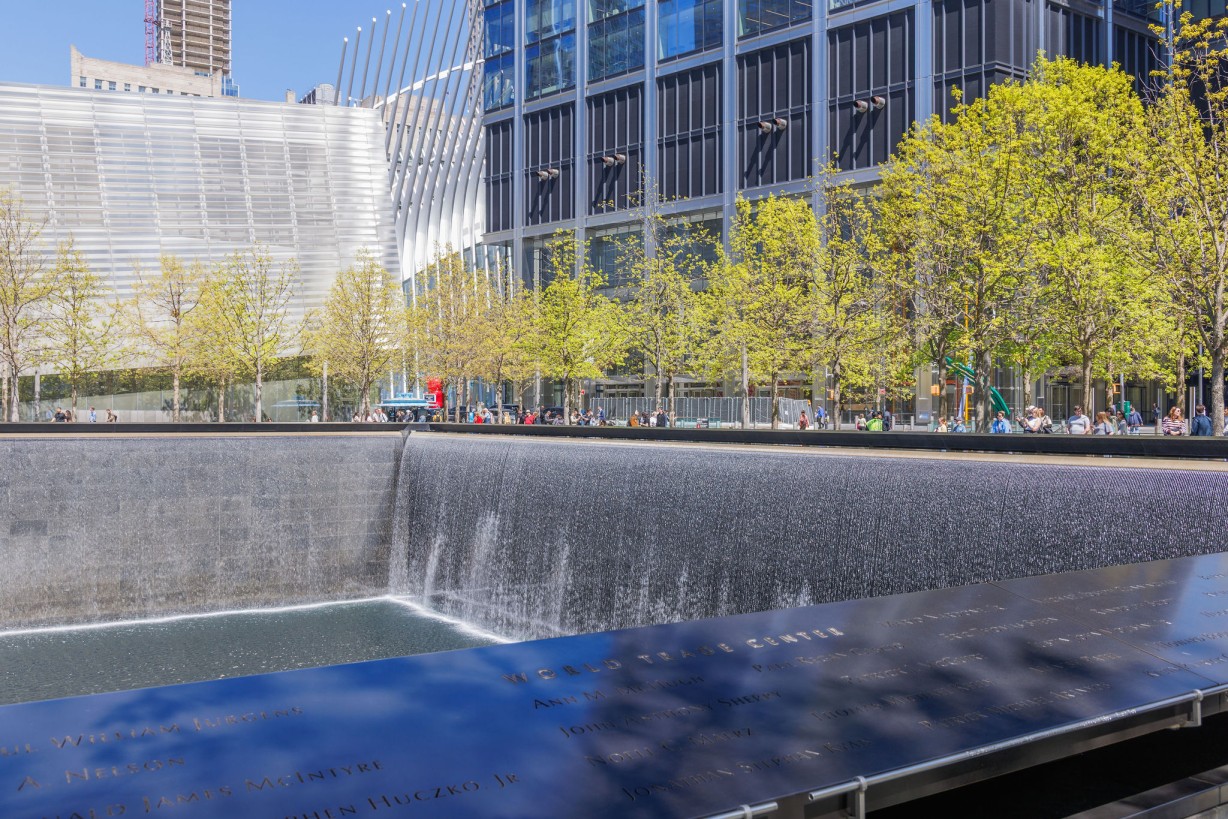
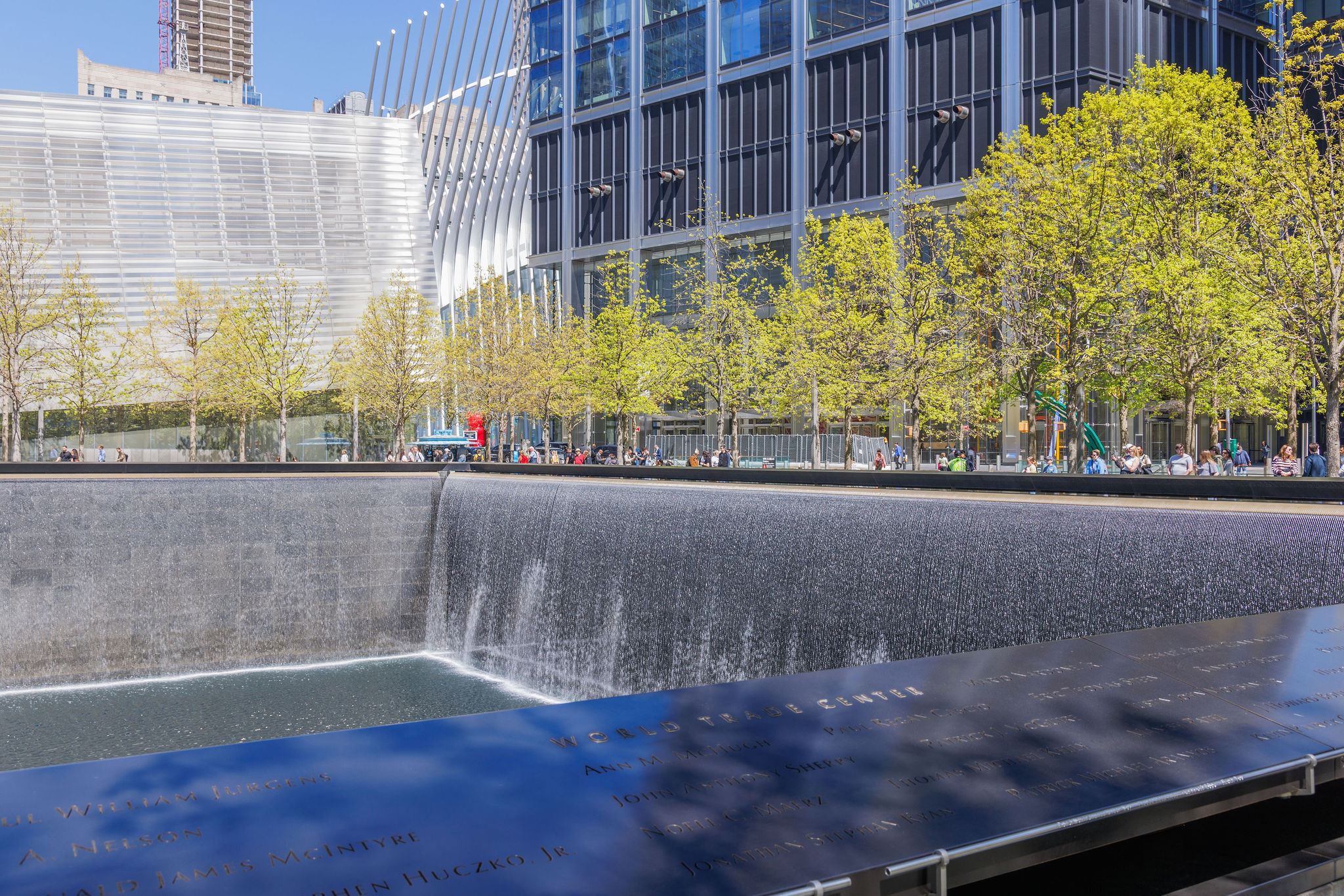
The Oculus was built as part of the rebuilding of the site, and it was meant to read as the opposite of the memorial. The pools are dark stone, sunk into the ground, water falling into a void. The Oculus is white, rising out of the ground, all light and air. Calatrava talked about it as a symbol of rebirth; whether or not you buy the symbolism, the contrast is real when you walk from one to the other.
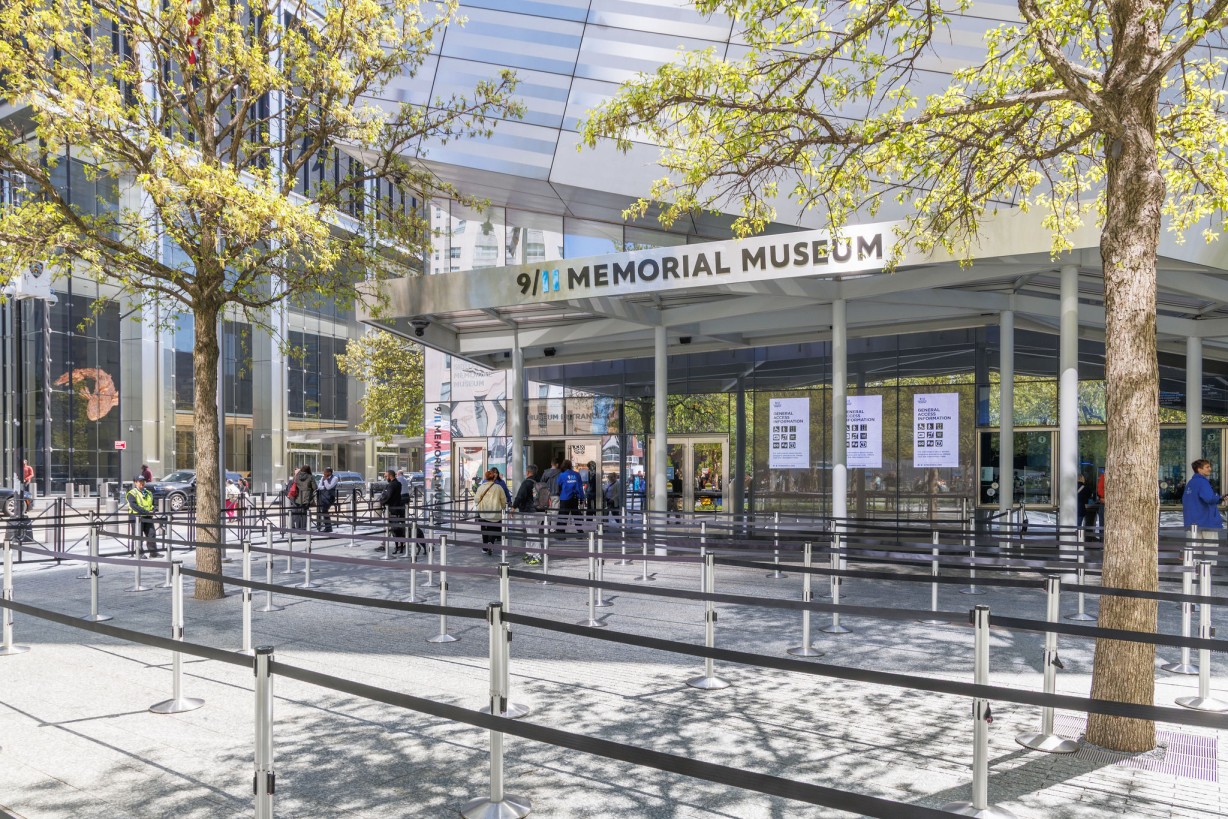
Practically, it sits between the things you're likely to visit. The 9/11 Memorial plaza is directly west of the main hall. The 9/11 Memorial Museum entrance is on the plaza beyond it. One World Trade Center and One World Observatory are a few hundred feet northwest. If you're doing the whole site, the Oculus is the hinge in the middle, and it's the sensible place to duck in for restrooms, coffee, or shelter between stops.
Things worth knowing before you go
- It's a working station. Weekday rush hours (roughly 8–9:30 a.m. and 5–6:30 p.m.) bring tens of thousands of PATH commuters through the hall. It's still open to visitors, but you'll be in their way. Mid-morning and mid-afternoon are calmer.
- There's almost nowhere to sit. The design keeps the floor of the main hall empty. If you need a rest, the shopping concourse has a few benches and the plaza outside has more.
- Restrooms are here, on the concourse level — useful to know, since the memorial plaza has none and the museum's are past security.
- On September 11 the hall is open but the mood is different: the skylight is open, the light is the point, and staff ask for quiet. Check ahead if you're planning to visit that day; access and hours around the site change for the anniversary.
- The name is unofficial. Signs say World Trade Center Transportation Hub. Everyone, including the MTA, calls it the Oculus.
Walking through it on the way to the pools
The Oculus is the second-to-last stop on our 9/11 Memorial Tour, and it's placed there on purpose. By the time you reach it you've walked from City Hall past St. Paul's Chapel and the FDNY Ten House, and the story has been about what was lost. The Oculus is where it turns — you step out of the white hall and the reflecting pools are directly in front of you. If you'd rather see it with someone who can tell you what stood on this block before, the tour runs daily from Broadway and Warren Street.
Frequently Asked about
the Oculus
Is the Oculus free to visit?
What is the Oculus actually used for?
Who designed the Oculus?
Can you see the Oculus skylight open?
How long should I spend at the Oculus?
9/11 Memorial Tour with Optional Museum and One World Access

9/11 Memorial Tour with Optional Museum and One World Access