

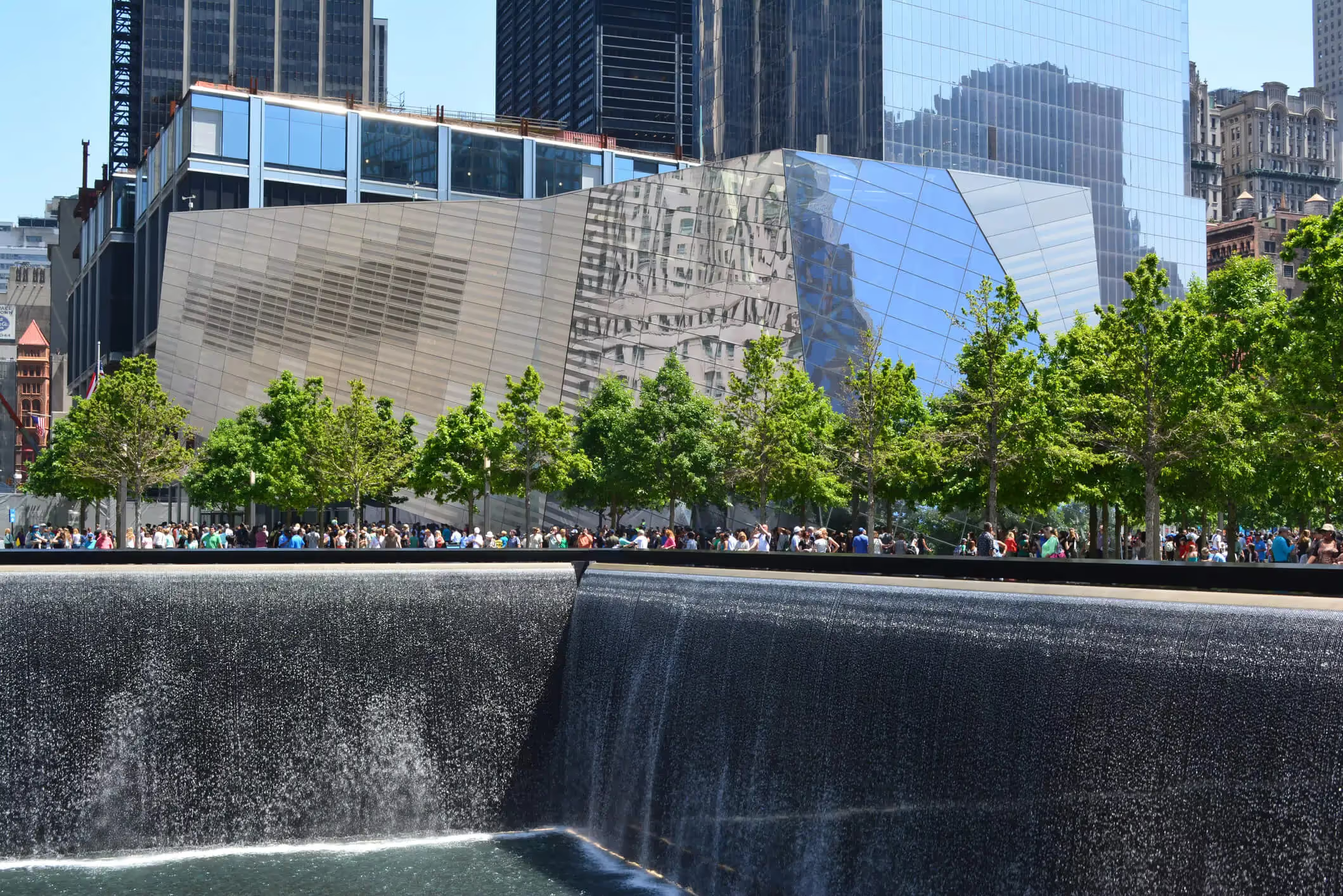


The 9/11 Memorial is a deeply moving tribute to the nearly 3,000 victims who lost their lives in the terrorist attacks of September 11, 2001.
Located at the World Trade Center site in Lower Manhattan, the Memorial features two reflecting pools, each nearly an acre in size, set within the footprints of the Twin Towers.
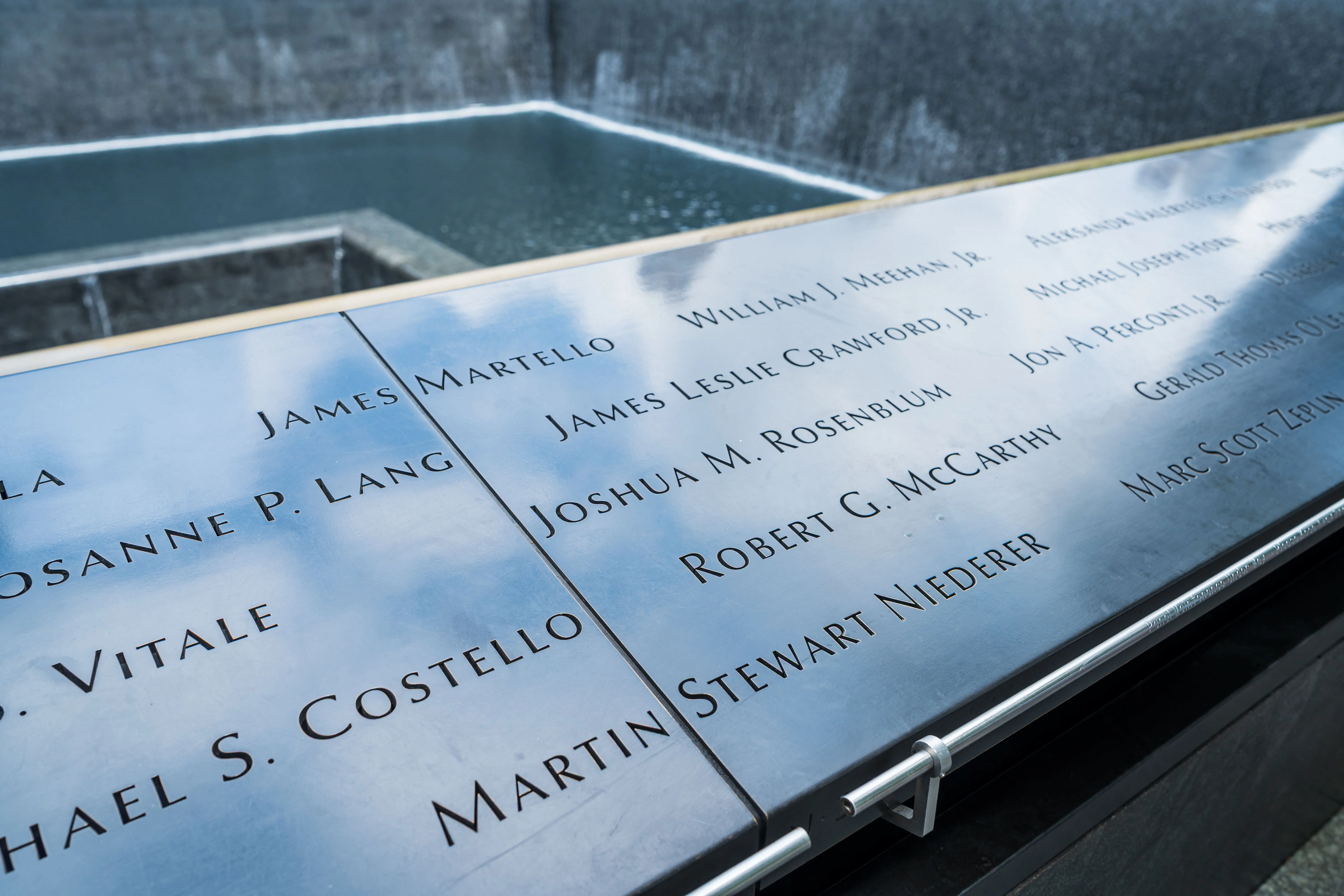
The pools are surrounded by bronze panels inscribed with the names of every person who died in the attacks, offering a place of remembrance and reflection.
The Memorial is part of a larger complex that includes the 9/11 Museum, which houses a comprehensive and poignant collection of artifacts, personal stories, and multimedia displays that document the events of that fateful day.
The 9/11 Memorial stands as a powerful symbol of resilience, remembrance, and hope for the future.
Size: The 9/11 Memorial covers approximately 8 acres of the World Trade Center site, with the two reflecting pools each measuring nearly an acre in size.
Names: The names of the 2,983 victims are inscribed on 76 bronze panels that surround the two reflecting pools. The arrangement of the names is based on a system called "meaningful adjacencies," which groups the names according to relationships and affiliations.
Reflecting Pools: Each reflecting pool features the largest man-made waterfalls in North America, with water cascading down into a void, symbolizing the loss and the ongoing impact of the tragedy.
Survivor Tree: The Memorial is home to the "Survivor Tree," a Callery pear tree that was recovered from the rubble of Ground Zero, nursed back to health, and replanted at the site. It has become a symbol of resilience and survival.
Opening: The 9/11 Memorial was dedicated on September 11, 2011, marking the 10th anniversary of the attacks, and was opened to the public the following day.
Visitor Numbers: Since its opening, the Memorial has welcomed millions of visitors from around the world, with the site serving as a place of pilgrimage for those wishing to pay their respects.
Museum Artifacts: The 9/11 Museum, which opened in 2014, contains over 10,000 artifacts, including pieces of steel from the Twin Towers, first responders' vehicles, and personal items recovered from the site.
Visiting the 9/11 Memorial is a somber and reflective experience that’s best undertaken when you can devote the time and attention it deserves.
Early mornings are a peaceful time to visit, particularly if you wish to avoid larger crowds. Arriving early allows you to experience the site in relative quiet.
Another good time to visit is late afternoon or early evening, when the Memorial is illuminated, creating a serene atmosphere as the sun sets.
The Memorial is open until 8:00 PM, offering a wide window of opportunity throughout the day.
Keep in mind that the 9/11 Museum has separate operating hours, typically opening later in the morning and closing by early evening, so plan your visit accordingly if you wish to explore both the Memorial and the Museum.
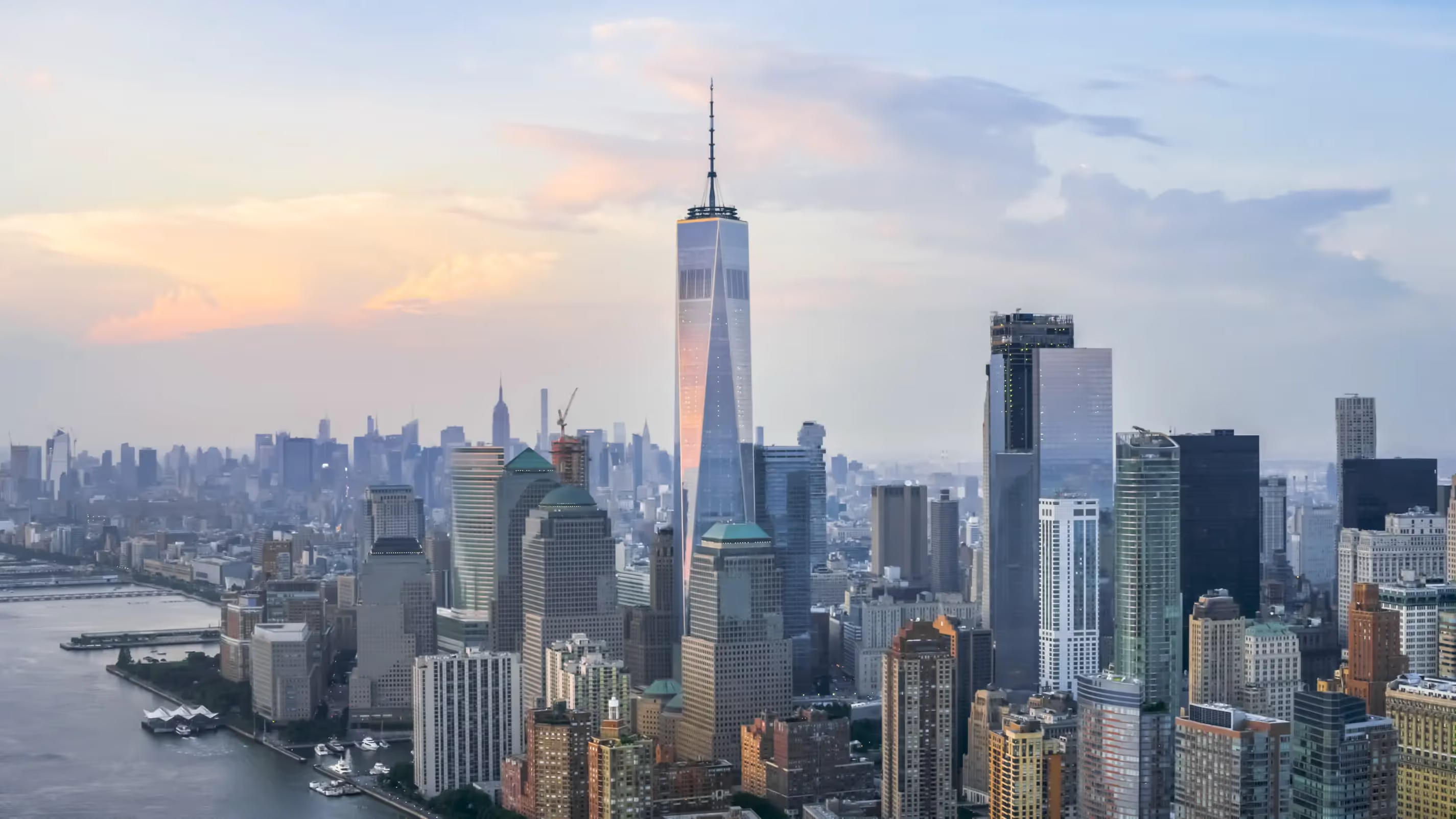
The 9/11 Memorial is at 180 Greenwich Street in Lower Manhattan, at the World Trade Center site, and it's one of the most accessible locations in the city with more than a dozen subway lines converging nearby.
Take the 1 train to WTC Cortlandt, which is directly beneath the site; the R or W to Cortlandt Street, which exits into the Oculus; or the E train to World Trade Center, its final stop. The A, C, J, Z, 2, 3, 4, and 5 trains all stop at Fulton Street, a five-minute walk east. PATH trains from New Jersey arrive inside the Oculus.
Use our interactive NYC subway guide to plan your exact route from any hotel or neighborhood before you arrive.



.avif)