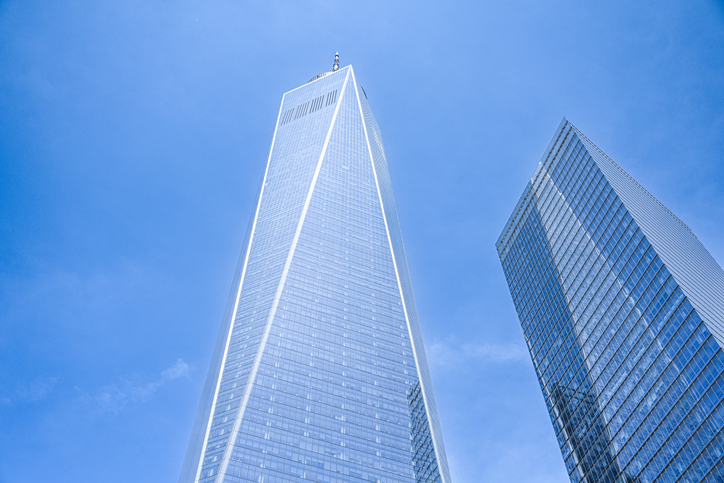
Wall Street is the eight-block street at the heart of Lower Manhattan's Financial District and the most famous address in global finance, running from Broadway east to the East River. Its name comes from an actual wall: a wooden palisade the Dutch built along the northern edge of New Amsterdam in 1653 to keep out the English and the Lenape. The wall came down in 1699; the name never did.
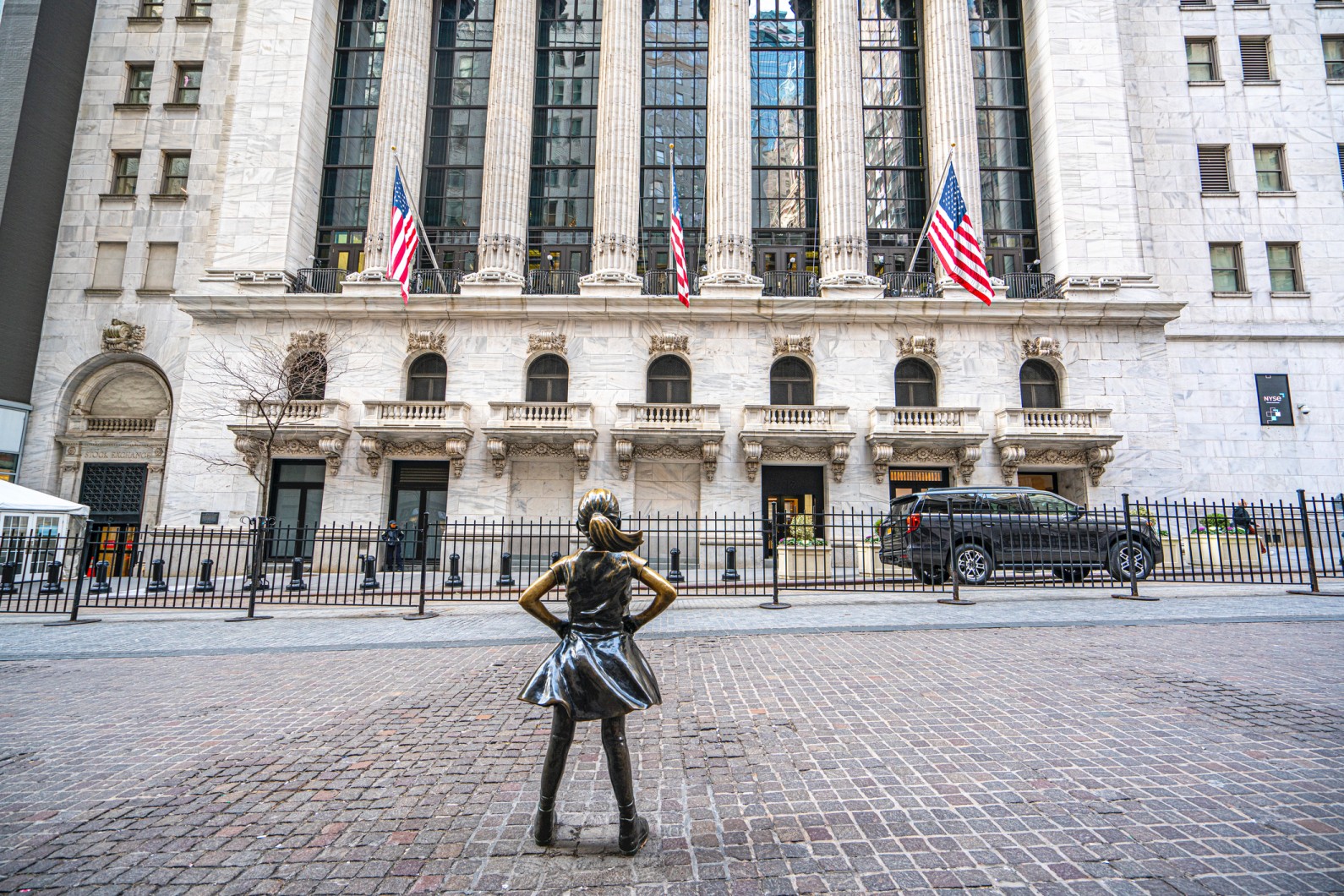
The street's landmarks tell the story of American money and government in a few hundred yards. The New York Stock Exchange, with its Corinthian columns and giant flag, has traded at the corner of Wall and Broad Streets since 1903. Across from it stands Federal Hall, where George Washington took the oath of office as the first President in 1789 and where the Bill of Rights was passed, marked today by a bronze statue of Washington on the steps. At the head of the street, Trinity Church's Gothic spire, once the tallest structure in the city, looks down Wall Street from Broadway, with Alexander Hamilton buried in its churchyard.
A block south, in Bowling Green, stands the Charging Bull, the 7,000-pound bronze that sculptor Arturo Di Modica installed without permission in 1989 as a symbol of American resilience after the 1987 crash. Today it's the most photographed sculpture in Lower Manhattan, and the Fearless Girl statue that once faced it now stands opposite the Stock Exchange.
Wall Street has been the center of American finance for over 230 years. Here are the key facts every visitor should know:
Wall Street is a working financial district, and it's at its most alive on weekday mornings between 8am and 10am, when traders and bankers pour out of the subway and the street has the energy people expect. Weekends are quiet, with the Exchange closed and the plazas empty, which makes them the best time for unobstructed photographs.
The Charging Bull draws a line of visitors from about 10am onward every day of the year; come before 9am to photograph it alone. Federal Hall is open weekdays only, from 9am to 5pm, so plan a weekday if you want to go inside. Trinity Church is open daily.
Wall Street sits between two other major sights, the 9/11 Memorial ten minutes north and Battery Park with the Statue of Liberty ferry five minutes south, so the most efficient plan is a morning walk that links all three. The Financial District empties out after 7pm on weekdays and stays quiet in the evening, though the lit Stock Exchange facade is worth seeing after dark.
Wall Street is at the southern tip of Manhattan in the Financial District, and it's served by several subway stations. Take the 2 or 3 train to Wall Street, which exits at William Street a block from the Stock Exchange, or the 4 or 5 to Wall Street, which exits at Broadway beside Trinity Church. The J and Z trains stop at Broad Street, directly in front of the Exchange.
For the Charging Bull, take the 4 or 5 to Bowling Green, where the statue stands outside the station. The R and W trains stop at Rector Street, a three-minute walk. From the 9/11 Memorial, Wall Street is a ten-minute walk south down Broadway.
Use our interactive NYC subway guide to plan your exact route from any hotel or neighborhood before you arrive.