Of the roughly 400 trees on the 9/11 Memorial plaza, one has a railing around it. It's shorter than the others, it's a different species, and in early spring it's the only one in bloom. It's also the only thing on the site that was there before the towers fell and is still alive.
This is the story of the Survivor Tree: what it is, how it was found in the rubble, the nine years it spent in a Bronx nursery, why its trunk looks the way it does, and the seedlings that have been sent from it to Boston, Paris, Orlando, and dozens of other places. Plus where to find it and when to go.
What is the Survivor Tree?
The Survivor Tree is a Callery pear tree on the 9/11 Memorial plaza — the only living thing recovered from the World Trade Center site after the attacks. It was found in the rubble in October 2001, burned and broken, with roots snapped and one branch still alive. It was taken to a city nursery in the Bronx, nursed back for nine years, and replanted at the memorial in December 2010, where it's been growing ever since.
You'll find it between the two reflecting pools, closer to the South Pool, ringed by a low railing. It's the only tree on the plaza that isn't a swamp white oak, and in spring it's the first thing to bloom. Most visitors walk past it. This is the story of why you shouldn't.
What happened to it on September 11
Before 2001, the tree stood on the east side of the World Trade Center plaza, near Building 5, one of a row of Callery pears planted as ordinary landscaping in the 1970s. Nobody paid attention to it. When the towers came down, the plaza was buried under the debris pile, and the tree was buried with it.
It was found in October 2001, more than a month into the recovery, by workers clearing the plaza. What was left was about eight feet of trunk, snapped roots, and branches that were burned black. There was one branch with a bud on it. That was enough for someone to argue it shouldn't go in a dumpster, and it was dug out and sent to the city's Parks Department instead.
Nine years in the Bronx
The tree went to the Arthur Ross Nursery in Van Cortlandt Park, run by the NYC Parks Department, where it was cut back, replanted, and watched. For the first year nobody was sure it would take. Then it did — new branches, then leaves, then, a few years in, blossom.
In March 2010, with the tree finally strong enough to move, a storm tore through the nursery and uprooted it. The roots were exposed for days. The Parks crew stood it back up, staked it, and it survived that too. By that point the people caring for it had started calling it the Survivor Tree, and the name stuck.
It stayed in the Bronx until it was big enough — and the plaza was finished enough — to go home.
Coming home: the replanting, and what it looks like today
In December 2010, the tree was brought back to Lower Manhattan by truck and planted on the memorial plaza, a few months before the memorial opened to the public on the tenth anniversary. It was surrounded by a railing and, later, by a small plaque. It's grown to more than 30 feet since.
Look at the trunk. The lower part is dark, gnarled, and scarred — that's the eight feet that survived the collapse. Above it the bark is smooth and pale. The line between the two is the recovery. The branches that grew back are longer and straighter than the stubs they grew from, and in spring the whole thing goes white with blossom.
It's a Callery pear, which is worth knowing because it's an ordinary tree. They line streets all over the East Coast. It wasn't chosen for the plaza; it was one of a few dozen planted there in the 1970s as landscaping, and it's the only one that came back.
The seedling program: Survivor Trees around the world
Since 2013, the 9/11 Memorial has grown seedlings from the tree and given them to communities that have lived through their own tragedy. The seedlings are raised by students at John Bowne High School in Queens, which has an agricultural program, and three are given out each year.
They've gone to Boston after the marathon bombing, to Newtown after Sandy Hook, to Orlando after Pulse, to Paris after the 2015 attacks, to Parkland, to Christchurch, and to towns hit by hurricanes, wildfires, and tornadoes. Each one is planted with a plaque explaining where it came from. There are now Survivor Tree descendants on several continents, all from one Callery pear that was nearly thrown away in 2001.
You can't buy a seedling, and individuals can't apply for one. The memorial's website has the list of recipients and the nomination process for communities.
How to find it, and when to visit
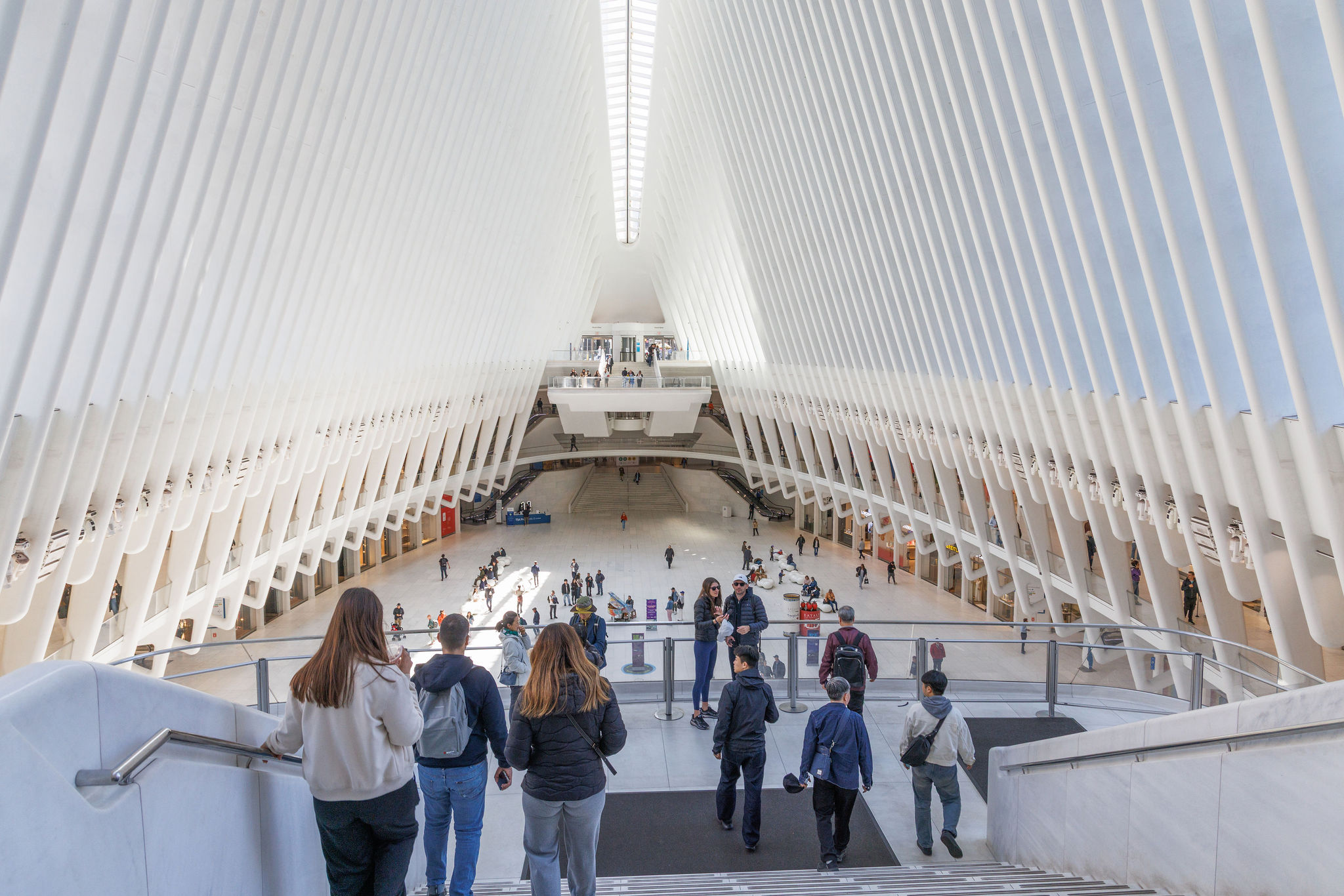
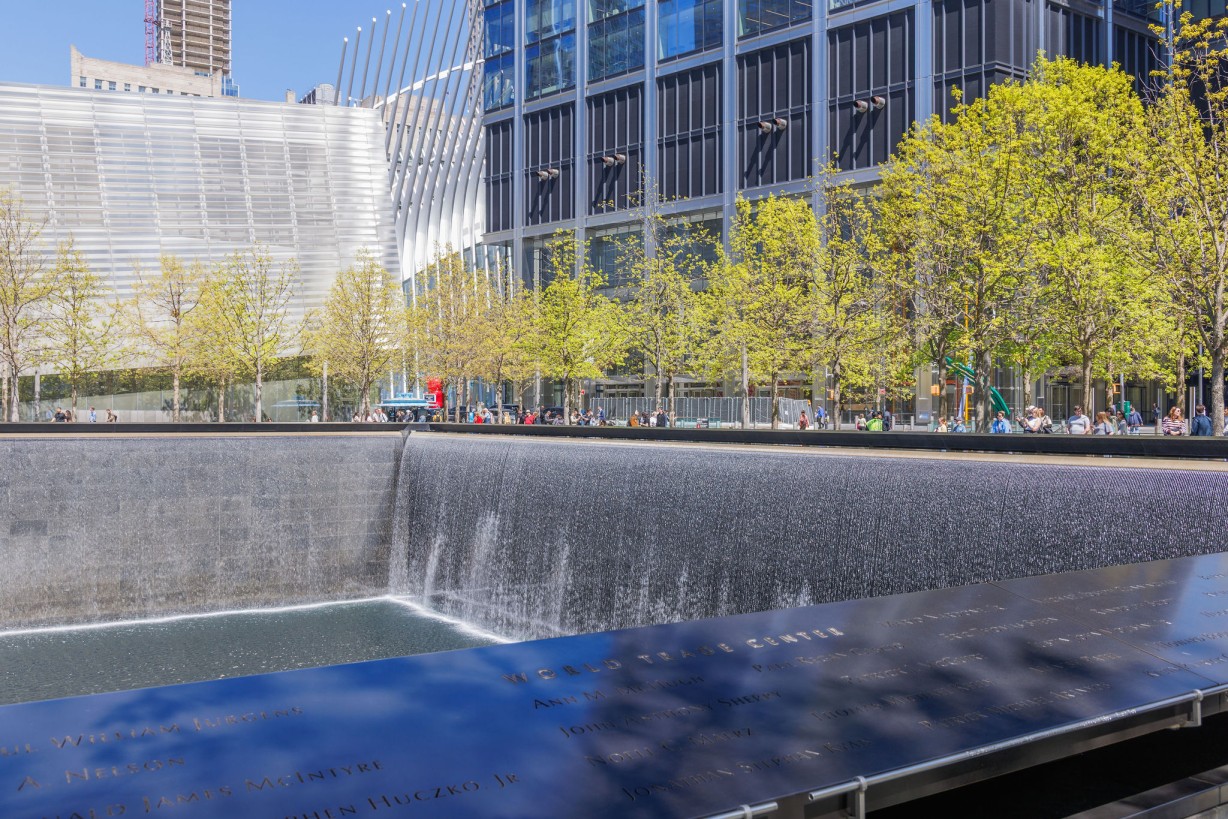
The tree stands on the memorial plaza between the North and South Pools, on the eastern side near the South Pool, surrounded by a low railing. The plaza is free and open daily from 8 a.m. to 8 p.m. If you enter from the Oculus side, walk toward the South Pool and look for the one tree with a fence around it and a small crowd.
If you can choose the season, choose early spring. Callery pears bloom in late March or early April, before the swamp white oaks around them have leafed out, so for a couple of weeks the Survivor Tree is a white cloud against bare branches. It's the best photograph on the plaza and the reason the tree is easy to spot from a distance.
On September 11 itself, the plaza is closed to the public during the morning ceremony and reopens in the afternoon. The tree is usually surrounded by flowers and notes that day. In September 2026, the 25th anniversary, expect it to be busier than usual through the week.
A few things to keep in mind when you visit
- Don't touch it. The railing is there because thousands of people a day would otherwise put a hand on the trunk. The tree is healthy, but it's one tree, and it's had a hard life.
- It's a memorial, not a photo prop. Pictures are fine and expected — it's the most photographed tree in the city. Climbing the railing or posing in front of it with the pools behind is the kind of thing staff will step in on.
- People leave things. You'll sometimes see flowers, notes, or small flags at the base, especially around the anniversary. Leave them where they are.
- Look for the seedlings' story on the plaque at the railing, which names some of the places that have received a tree. It's short, and it's the part most people miss.
The last stop
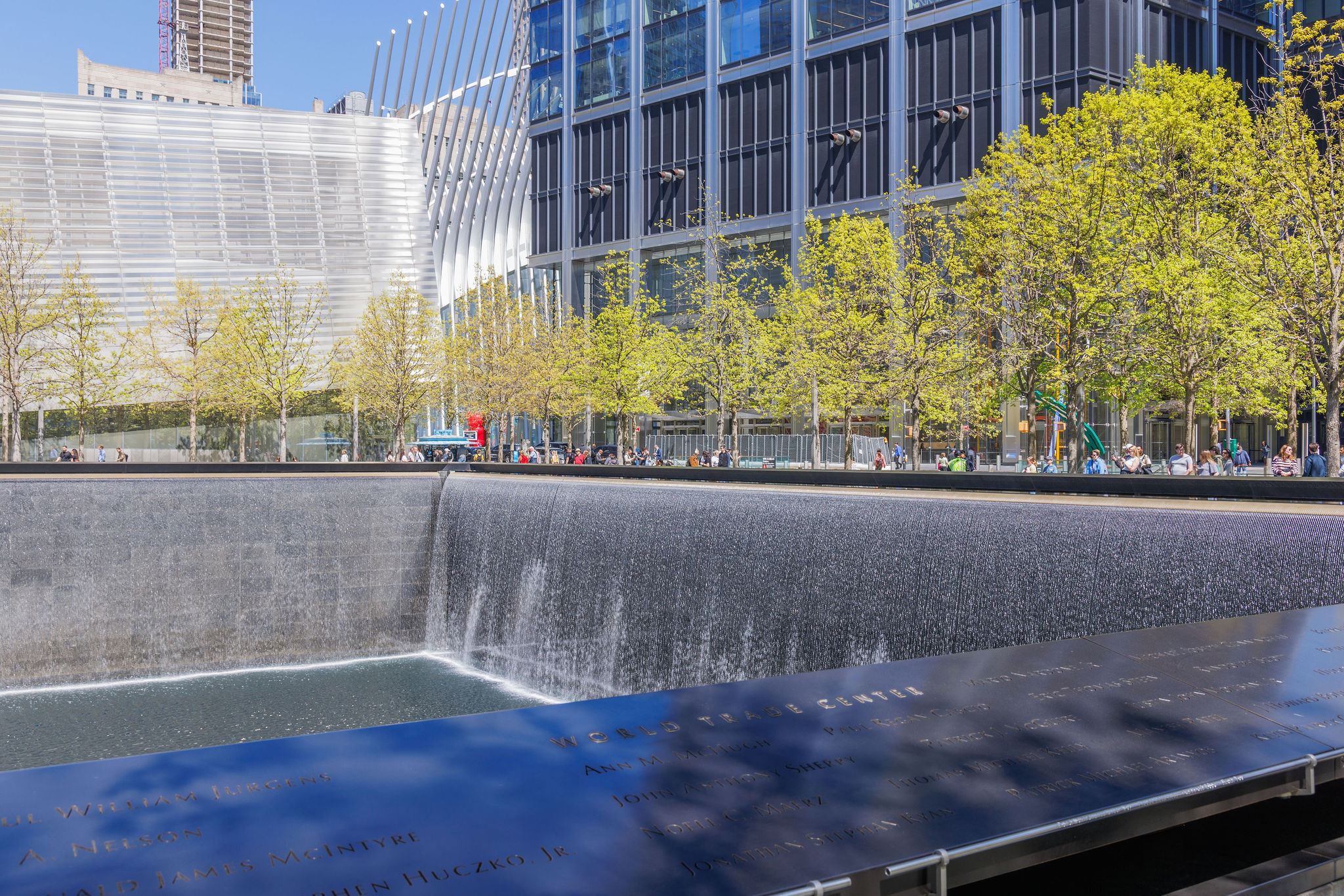
Our 9/11 Memorial Tour ends at the Survivor Tree, and every guide ends it there for the same reason: after ninety minutes walking through what happened on these blocks, it's the one thing on the site that's still growing. If you want to hear the rest of the story from someone who was in the city that morning — what the plaza looked like before, and how long it took to get from the pile to a tree in bloom — the tour runs daily from City Hall.
Frequently Asked about
the Survivor Tree
What kind of tree is the Survivor Tree?
Where exactly is the Survivor Tree at the 9/11 Memorial?
Is the Survivor Tree still alive?
Can I get a Survivor Tree seedling?
When is the best time to see the Survivor Tree?
9/11 Memorial Tour with Optional Museum and One World Access

9/11 Memorial Tour with Optional Museum and One World Access