The 9/11 Memorial is free, open every day, and sits in the middle of the rebuilt World Trade Center — which is exactly why so many visitors walk through it in 20 minutes and leave without knowing what they just saw.
This guide covers what our guides get asked most on the walk down from City Hall: whether you need a ticket (you don't, for the memorial), how to get there by subway, how long to allow, and what the pools, the names, and the tree actually mean. It also covers the four stops within a block of the plaza that most people never find on their own.
Is the 9/11 Memorial free? Hours, tickets, and what's actually included
Yes. The 9/11 Memorial — the plaza with the two reflecting pools — is free and open to the public every day from 8 a.m. to 8 p.m. No ticket, no timed entry, no security line. You can walk in from any side.
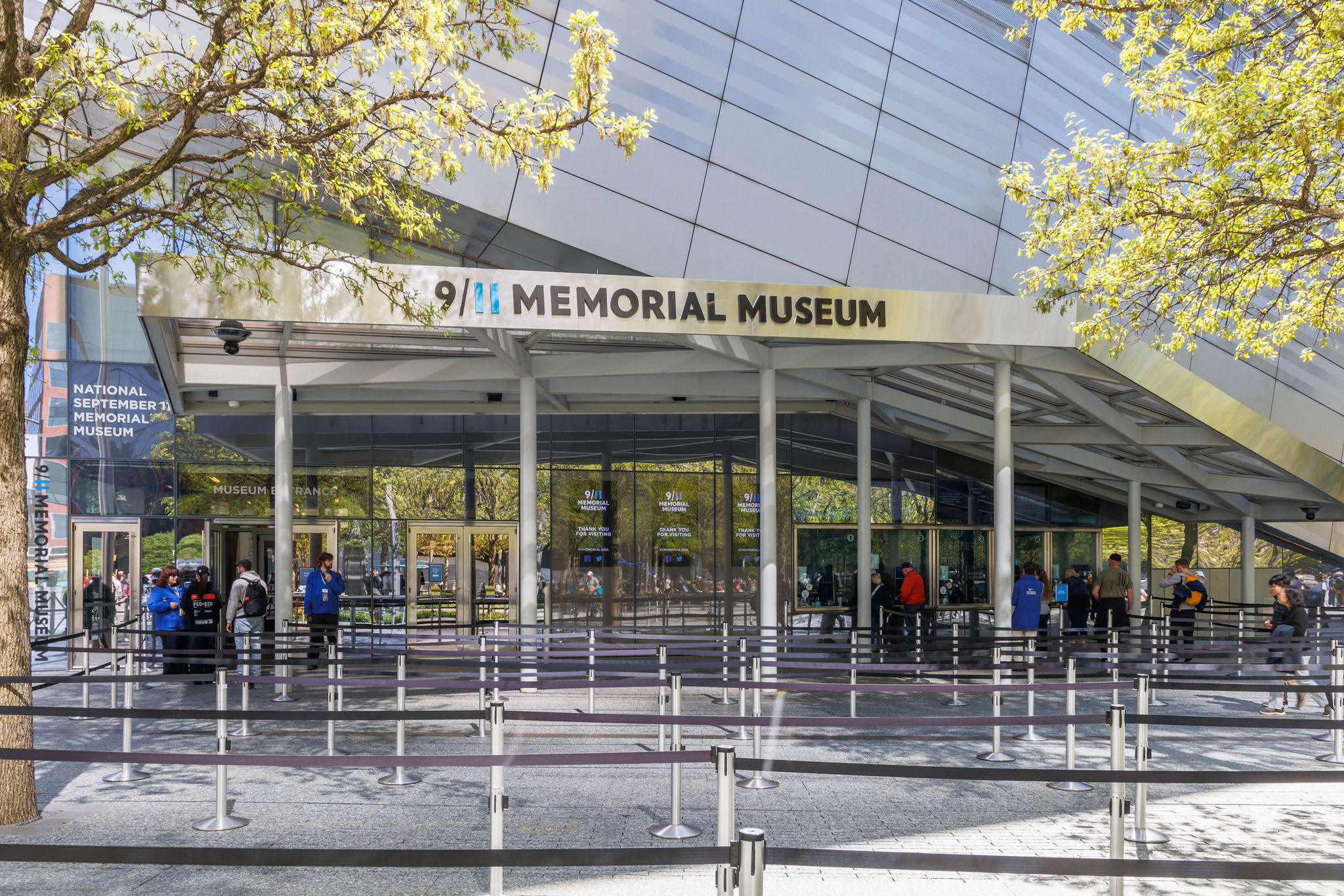
The confusion comes from the museum. The 9/11 Memorial Museum is the building on the plaza with the glass atrium, and it is a separate, ticketed visit. It's open Wednesday through Monday (plus many Tuesdays) from 9 a.m. to 7 p.m. and requires an advance, timed ticket. General admission is $24 to $36 depending on age, with adults at $36 and children six and under free. When people search for "9/11 memorial tickets," this is almost always what they mean.
So the short version: the outdoor memorial is free and always open during the day. The museum costs money and closes most Tuesdays. One World Observatory, at the top of the tower next door, is a third, separately ticketed thing.
The address for all of it is 180 Greenwich Street, New York, NY 10007.
How to get to the 9/11 Memorial by subway
Lower Manhattan has more subway lines converging on the World Trade Center than almost anywhere else in the city, so you have options:
- 1 train to WTC Cortlandt — the station is directly under the site.
- R or W to Cortlandt Street — exits into the Oculus.
- E train to World Trade Center — the last stop, also connected to the Oculus.
- A, C, J, Z, 2, 3, 4, 5 to Fulton Street — a five-minute walk west along Fulton.
- PATH from New Jersey arrives inside the Oculus.
If you're joining our guided tour, we meet at Broadway and Warren Street, next to the City Hall station on the R and W. It's a ten-minute walk from there to the plaza, and the walk is the point — St. Paul's Chapel and the FDNY Ten House are on the way.
What to see at the 9/11 Memorial: the reflecting pools, the names, and the Survivor Tree
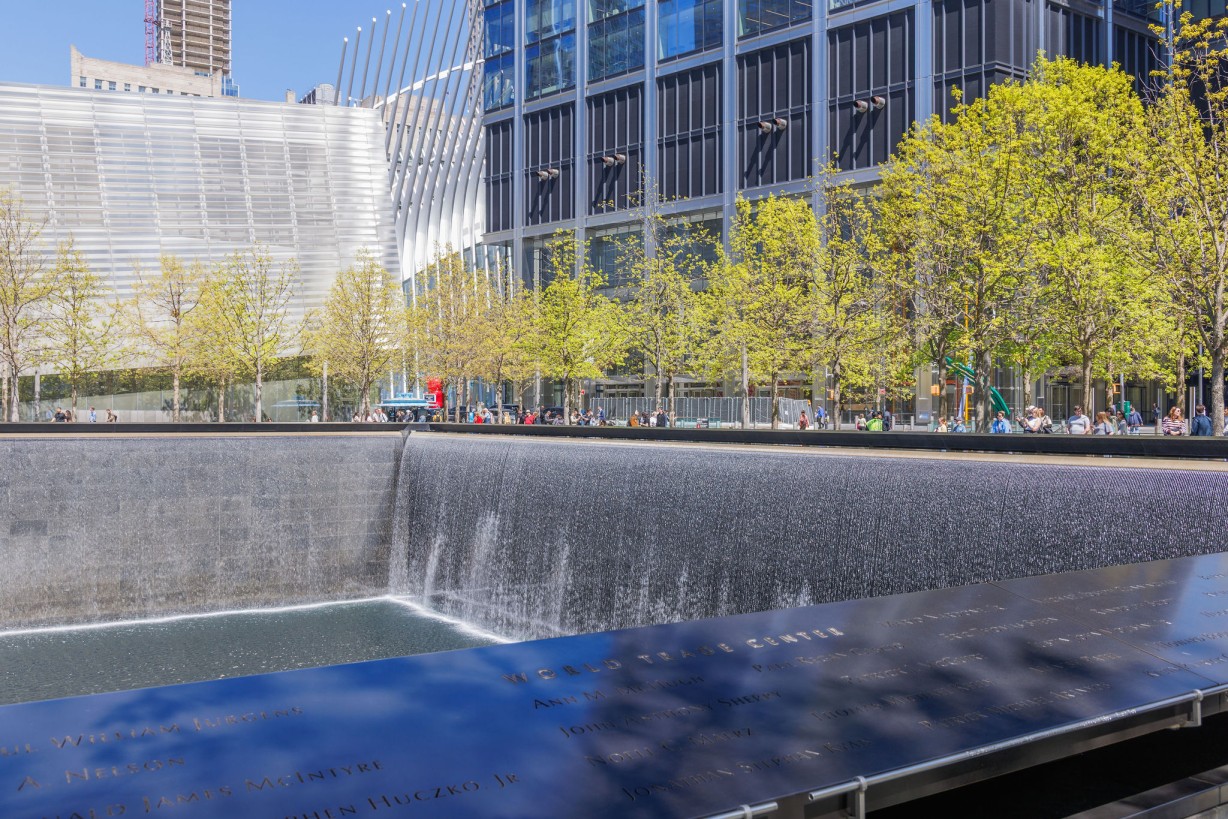
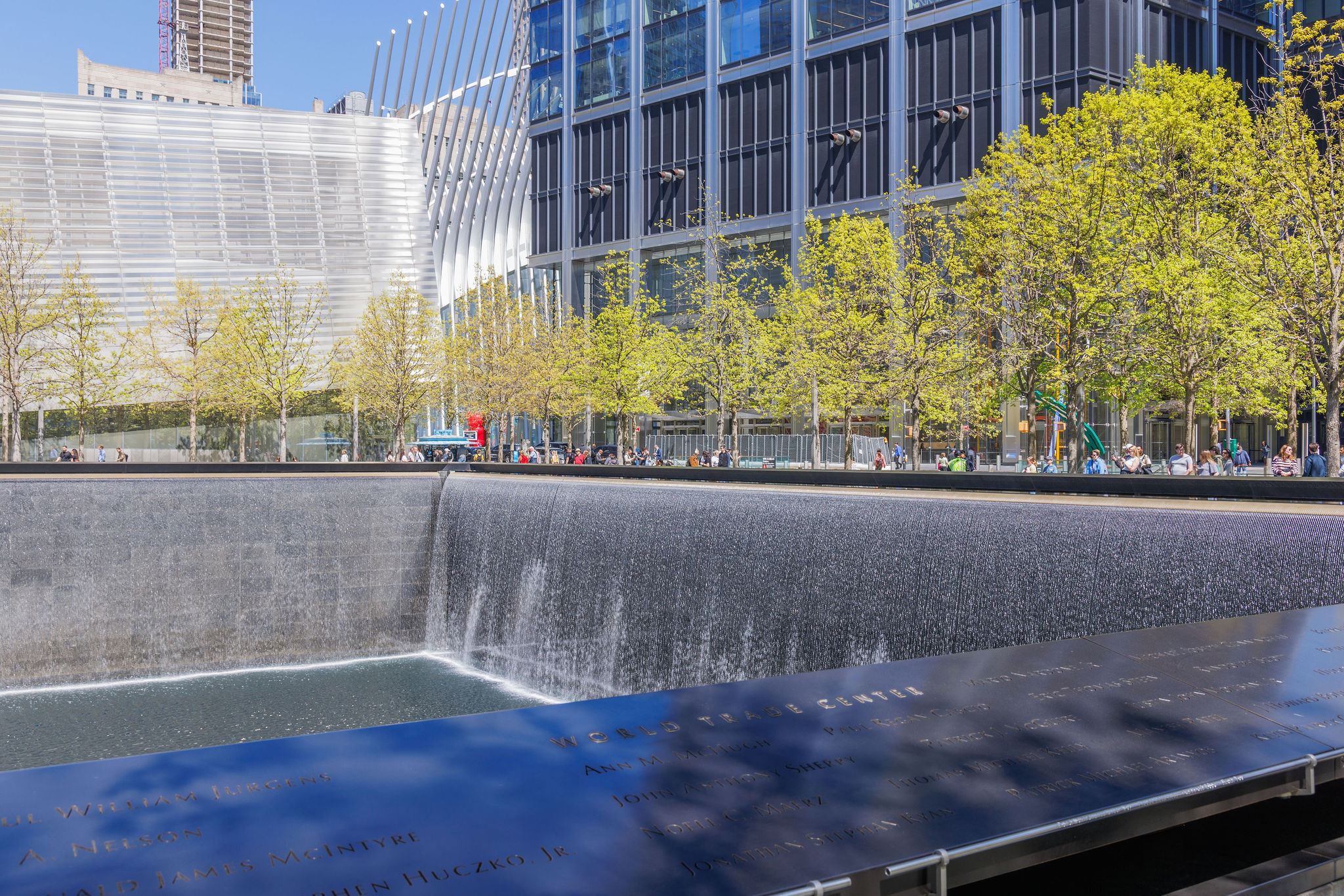
The memorial's two pools sit in the exact footprints of the North and South Towers. Each is nearly an acre, and water falls 30 feet down all four sides into the pool below, then disappears into a smaller square void at the center. They are the largest man-made waterfalls in North America, and the sound is deliberate — it's loud enough that you stop hearing the city.
.webp)
Around the edge of each pool, 2,983 names are cut into bronze parapets: the 2,977 people killed on September 11, 2001, at the World Trade Center, the Pentagon, and near Shanksville, Pennsylvania, plus the six killed in the 1993 World Trade Center bombing. The names aren't alphabetical. They're grouped by what the designers called "meaningful adjacency" — colleagues next to colleagues, first responders with their units, and, in some cases, people who died together at the request of their families. On a person's birthday, museum staff place a single white rose in their name.

The Survivor Tree
Between the two pools stands a Callery pear tree that was pulled from the rubble in October 2001 with a snapped trunk and one living branch. It spent nine years recovering in a Bronx nursery, survived a storm that uprooted it again, and was replanted here in 2010. You can still see where the old, gnarled trunk ends and the new smooth growth begins. It's the stop our guides save for last, and it's the one people photograph most.

The stops most visitors miss: St. Paul's Chapel, FDNY Ten House, and the FDNY Memorial Wall
The plaza tells you what was lost. The blocks around it tell you what happened next, and most self-guided visitors never see them.
St. Paul's Chapel
One block east on Broadway, St. Paul's is the oldest surviving church building in Manhattan (1766) and the church George Washington walked to after his inauguration in 1789. On September 11 it stood a few hundred feet from the collapsing North Tower and came through without a single broken pane of glass — a large sycamore in the churchyard took the debris instead. For the next eight months it ran around the clock as a rest station for recovery workers, with cots in the pews and volunteers serving meals. Some of the notes and photographs pinned to its fence by families looking for missing relatives are still displayed inside.
FDNY Ten House
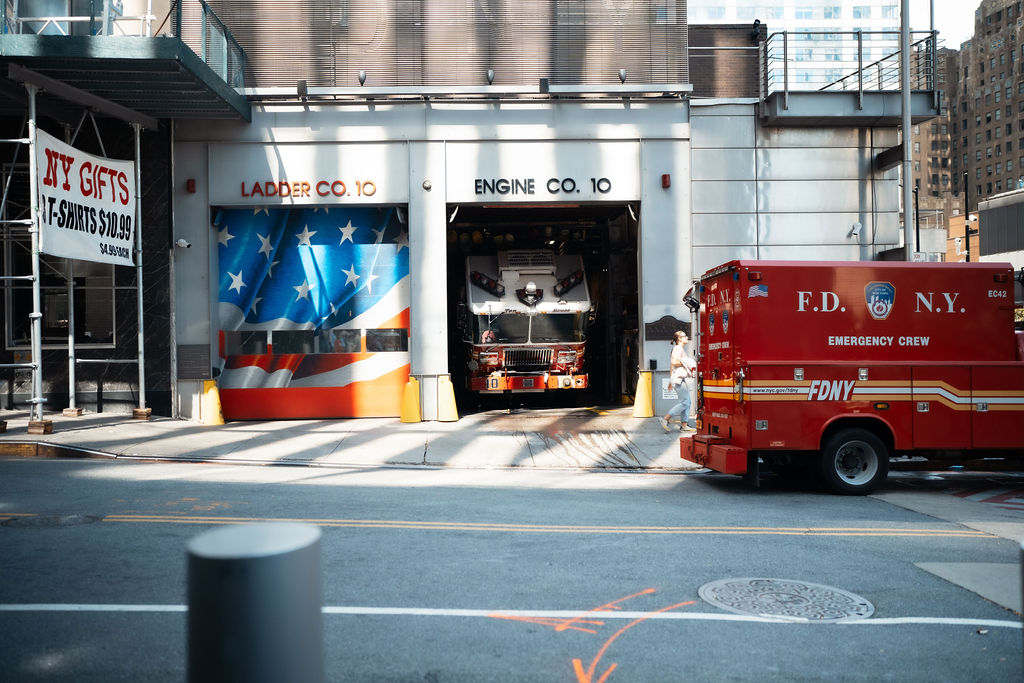
Directly across Liberty Street from the South Tower footprint is the firehouse of Engine 10 and Ladder 10 — the closest firehouse to the World Trade Center, and the first to respond. Its members were on the scene within minutes. The house itself was badly damaged and didn't reopen until 2003. It's an active firehouse today, so you'll often see the trucks and the crew.
The FDNY Memorial Wall
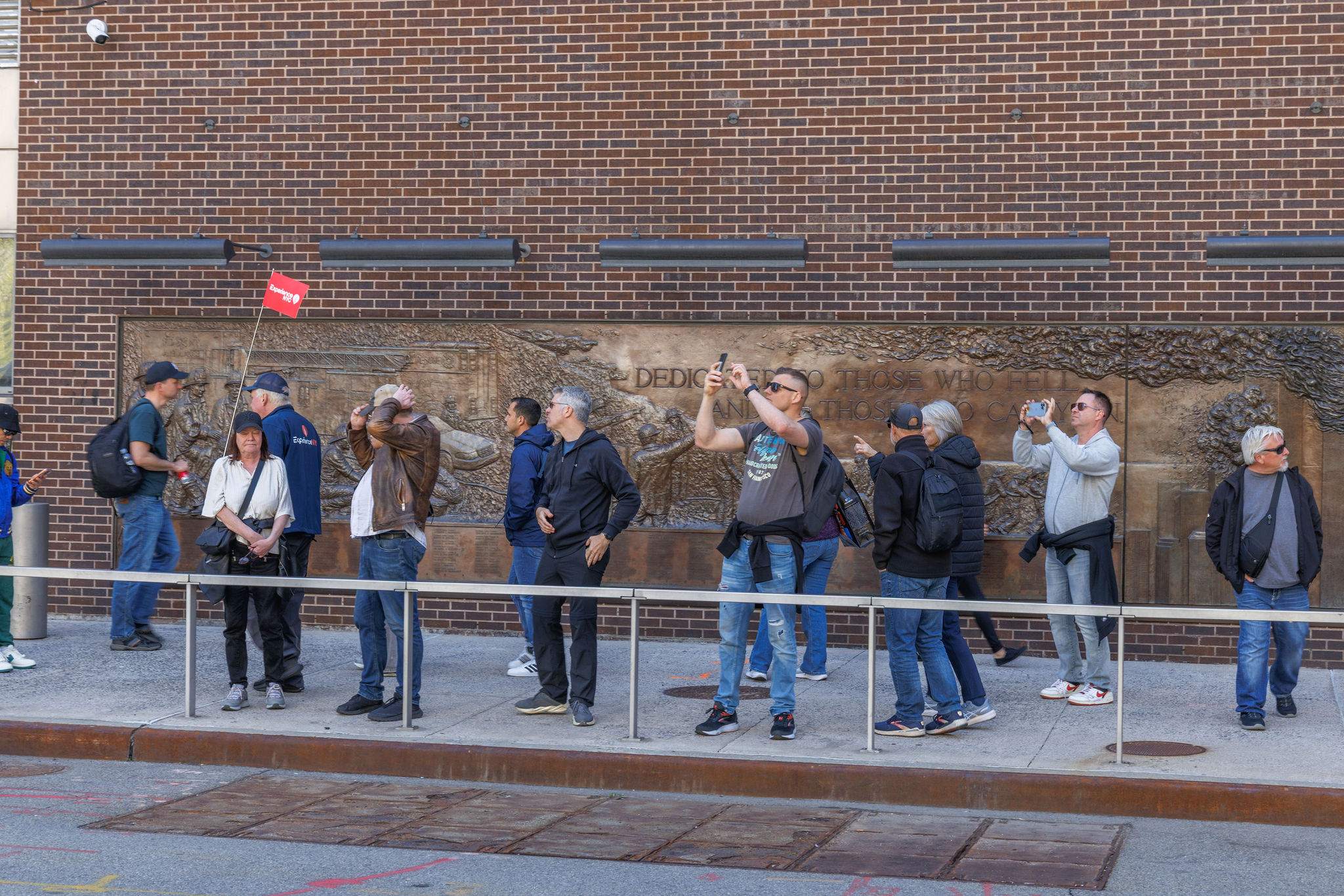
On Ten House's Liberty Street wall is a 56-foot bronze bas-relief dedicated in 2006. It depicts the towers and the firefighters working beneath them, and lists the names of the 343 members of the FDNY who died that morning. It's the memorial that firefighters visiting from around the world come to find.
The Oculus and One World Trade Center
You'll see both before you reach the pools. The Oculus is the white, ribbed structure that looks like a bird about to take off — that's the intent. Designed by Santiago Calatrava and opened in 2016, it's the transit hub for the PATH and a dozen subway lines, with a shopping concourse underneath. Its central skylight is engineered to open on September 11 each year, letting a strip of sunlight fall across the floor during the minutes the attacks unfolded.
.jpg)
One World Trade Center, usually called the Freedom Tower, rises to 1,776 feet — the year of the Declaration of Independence — making it the tallest building in the Western Hemisphere. One World Observatory occupies floors 100 to 102. The elevator ride up shows the Manhattan skyline building itself over 500 years in 47 seconds, and it's worth doing for that alone.
.webp)
How long does the 9/11 Memorial take?
It depends on how much of the site you're doing:
- Plaza only, self-guided: 20 to 30 minutes. Most people walk both pools, find the Survivor Tree, and leave.
- Guided memorial walk: about 90 minutes, covering the plaza plus St. Paul's, Ten House, the Memorial Wall, and the Oculus, with the story told in order.
- 9/11 Museum: the museum suggests 45 to 90 minutes; almost everyone we send in stays closer to two hours.
- One World Observatory: about an hour, including the ride up and down.
Doing all of it — walk, museum, and observatory — is a solid half day, roughly five hours. If you're only going to do two, pair the guided walk with the museum: the walk gives the museum context, and the museum is a hard place to go into cold.
A practical note: the museum has airport-style security and no coat check for large bags, so travel light on the day you visit.
Visiting on September 11 and the 25th anniversary
Every year on the morning of September 11, the memorial plaza closes to the public for the family commemoration, where the names are read aloud by relatives. It reopens to the public in the afternoon. In the evening, the two beams of the Tribute in Light rise from a rooftop a few blocks south and are visible across the city until dawn. If you want to be at the plaza on the anniversary, plan on the late afternoon or evening.
September 2026 marks 25 years. Expect the site, the museum, and the surrounding streets to be much busier than usual through the anniversary week, and book museum tickets well ahead.
One last thing, because it comes up: this is a memorial, and people who lost family here visit it every day. Sit on the benches, not the parapets. Keep voices low near the pools. Photographs are fine; selfies over the names are not.
Seeing it with someone who was there
Everything above is enough to visit the 9/11 Memorial well on your own. What it can't give you is the morning itself — where the smoke went, which streets people ran up, what the neighborhood sounded like at 10:28 a.m. and in the weeks after. Most of the guides on our 9/11 Memorial Tour are New Yorkers who were in the city that day, and the 90-minute tour is built around what they saw. It's $36 per person, runs daily, and you can add timed-entry tickets for the museum or One World Observatory so the day is booked in one place.
Frequently Asked about
the 9/11 Memorial
Is the 9/11 Memorial free to visit?
How deep are the 9/11 Memorial pools?
Can I find a specific name on the memorial?
Is the 9/11 Memorial appropriate for children?
What's the difference between the 9/11 Memorial and the 9/11 Museum?
9/11 Memorial Tour with Optional Museum and One World Access

9/11 Memorial Tour with Optional Museum and One World Access
.jpg)

.jpg)