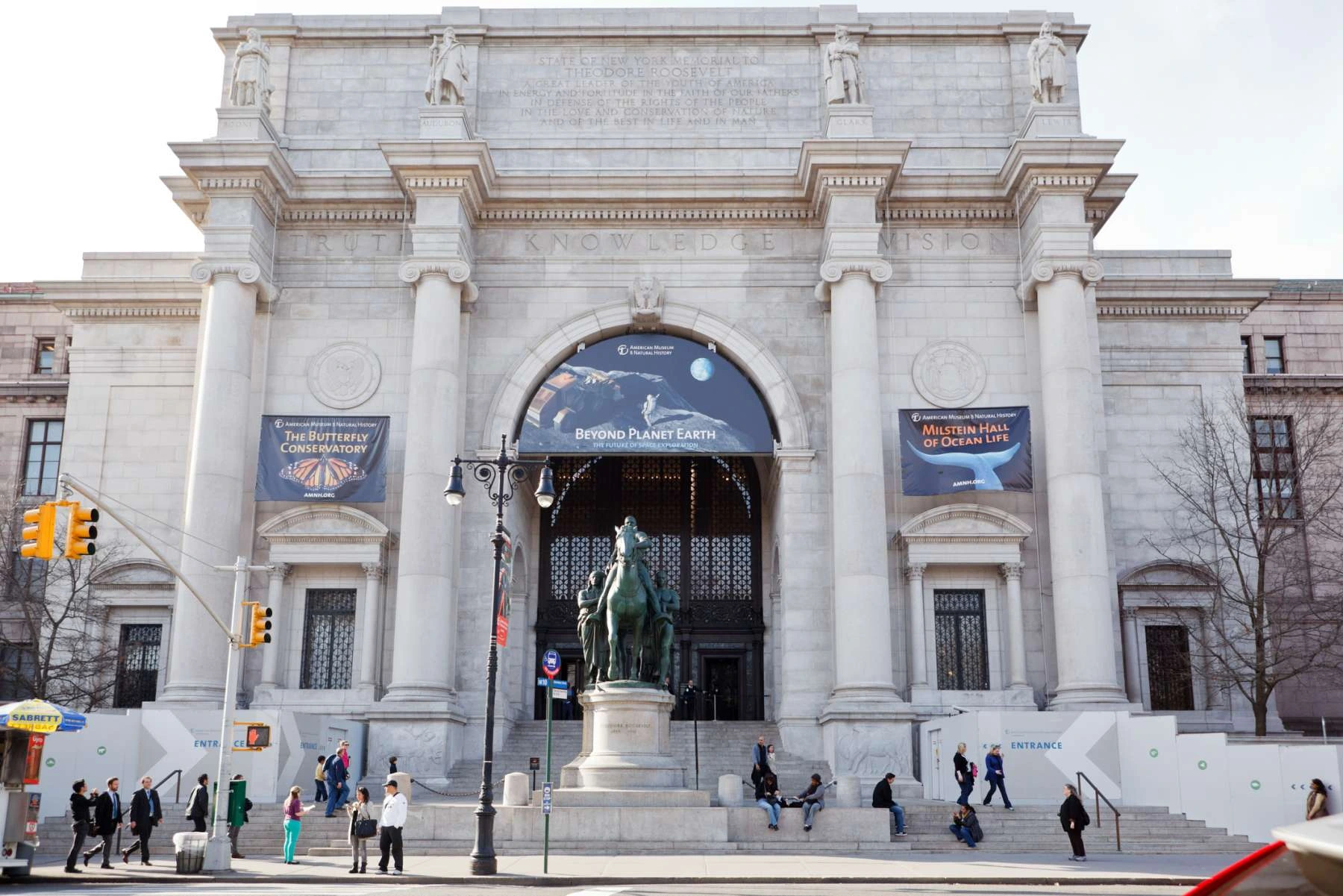
The American Museum of Natural History is one of the largest natural history museums in the world, occupying a 28-building complex across four city blocks on Central Park West between 77th and 81st Streets, directly across the park from the Met. Founded in 1869, it holds more than 34 million specimens and artifacts, and its halls of dinosaurs, dioramas, gems, and cultures draw about five million visitors a year.
The museum's icons are known to everyone who has been a child: the Tyrannosaurus rex and Apatosaurus in the fourth-floor dinosaur halls, the 94-foot blue whale suspended from the ceiling of the Hall of Ocean Life, the elephants in the Akeley Hall of African Mammals, and the habitat dioramas, painted in the early 20th century, that remain the finest in the world. The Rose Center for Earth and Space, a glass cube holding the Hayden Planetarium, opened in 2000, and the Gilder Center, a canyon-like new wing of glass and shotcrete, opened in 2023 with a live insectarium and butterfly vivarium.
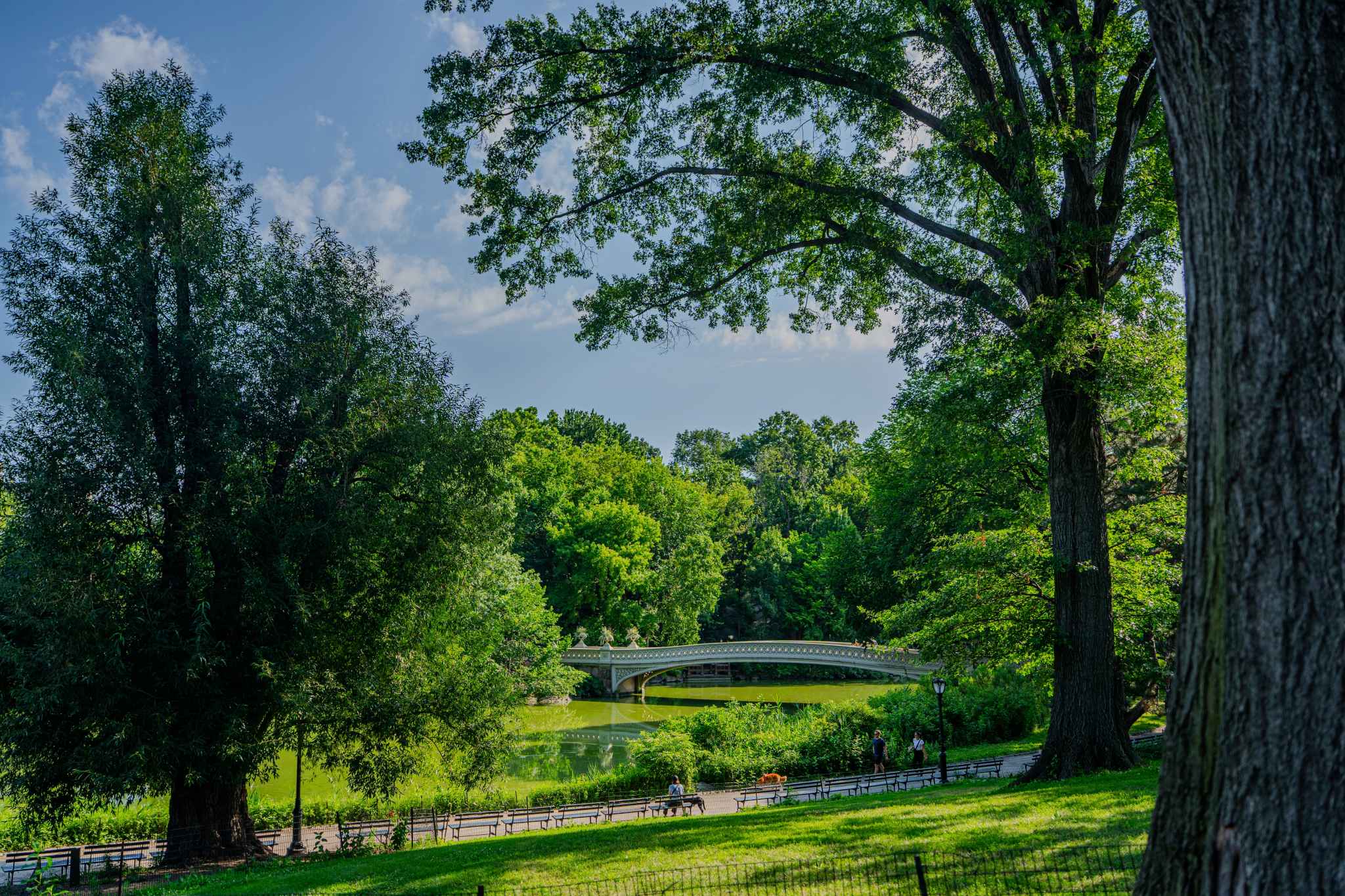
The museum is the setting of Night at the Museum, which is why the Theodore Roosevelt statue and the T. rex draw lines of children, and it's the natural companion to a Central Park day: the park's west side and the Dakota are a short walk, and the museum's Central Park West entrance opens directly onto the park.
The American Museum of Natural History has been on Central Park West since 1877. Here are the key facts every visitor should know:
The American Museum of Natural History is open daily from 10am to 5:30pm, closed only on Thanksgiving and Christmas, and it's busiest in exactly the ways you'd expect from the city's most popular family museum.
Weekday mornings right at the 10am opening are the best time, before the school groups arrive around 10:30 and while the dinosaur halls are quiet. Weekday afternoons after 2pm are calm again as the groups leave. Weekends and school holidays are the busiest, with timed slots selling out and lines at the popular halls; if you must come then, book the first slot and arrive early.
Winter is the museum's high season indoors, especially the weeks around Christmas and the February school break; summer weekdays are surprisingly manageable. Rainy days fill it at any time of year.
The museum is a natural pairing with Central Park's west side. On a good-weather day, spend the morning in the park at Strawberry Fields, the Dakota, and Belvedere Castle, then enter the museum in the early afternoon through the 81st Street entrance. On a rainy day, reverse it and give the museum the whole day.
The American Museum of Natural History is at 200 Central Park West between 77th and 81st Streets on the Upper West Side, and it has its own subway station: take the B or C train to 81st Street–Museum of Natural History, which exits directly into the museum's lower level. The 1 train stops at 79th Street on Broadway, a five-minute walk east.
The M79 crosstown bus connects the museum to the Met across Central Park in about 15 minutes. From the Dakota and Strawberry Fields at 72nd Street, it's a ten-minute walk north on Central Park West, and Belvedere Castle in the park is a ten-minute walk through the 81st Street entrance.
Use our interactive NYC subway guide to plan your exact route from any hotel or neighborhood before you arrive.