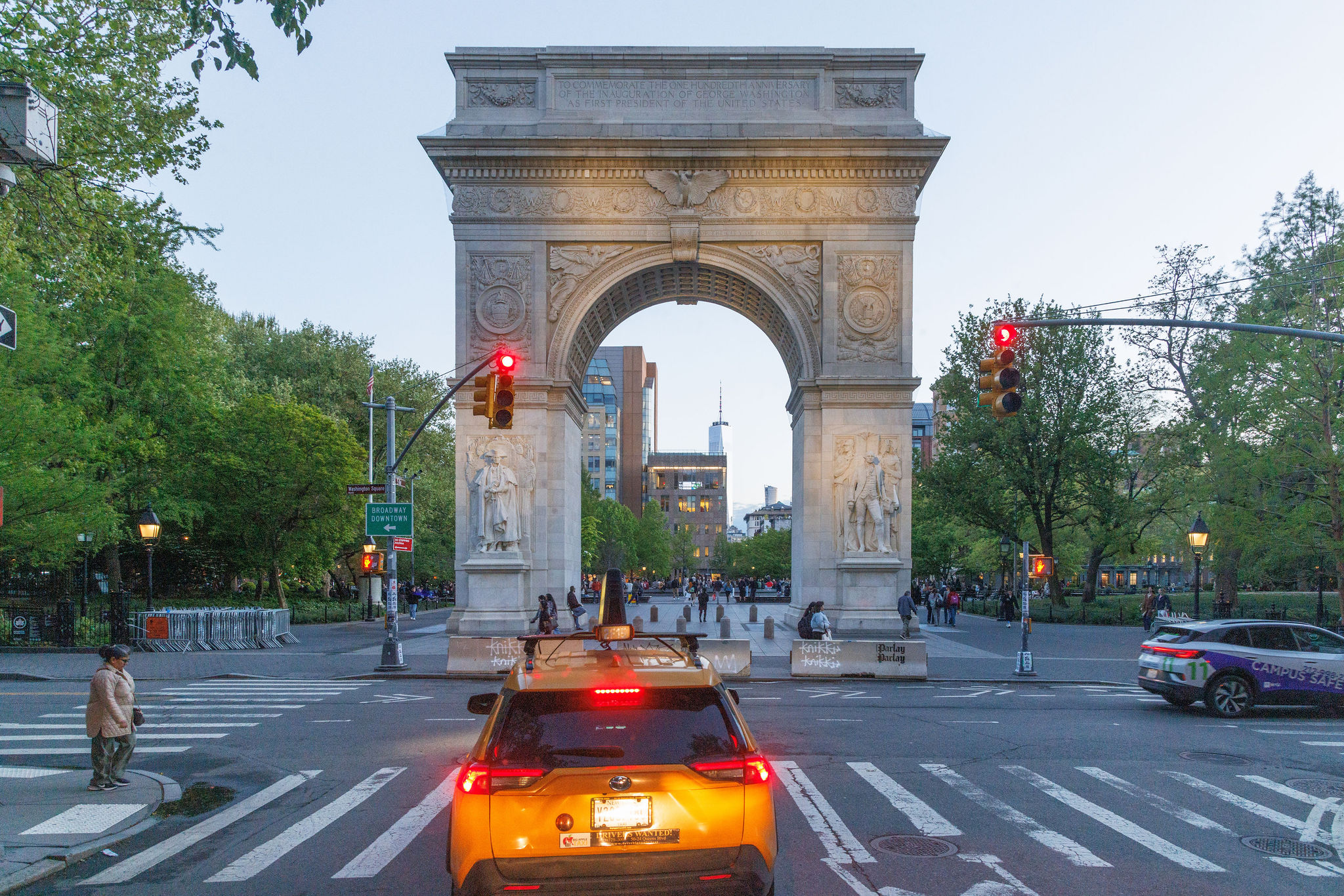
Washington Square Park is the ten-acre heart of Greenwich Village, a public square at the foot of Fifth Avenue that has been the stage for New York's bohemian, artistic, and political life for more than a century. Its centerpiece is the Washington Square Arch, a 77-foot marble triumphal arch designed by Stanford White and completed in 1892 to mark the centennial of George Washington's inauguration, standing at the exact point where Fifth Avenue begins.

The park is ringed by New York University, whose buildings occupy most of the surrounding blocks, and by the Greek Revival townhouses of the Row on its north side, once home to Edith Wharton and Henry James, who set his novel Washington Square here. The central fountain, the chess tables in the southwest corner, the dog runs, and the lawns fill every day with students, musicians, chess hustlers, street performers, and residents, and on a warm afternoon it's the liveliest public space in Manhattan.
Its history runs deeper than the surface. The land was a potter's field where an estimated 20,000 people were buried before it became a parade ground in 1826, and it's been a gathering point for protest and performance ever since, from the folk singers of the 1960s to the pianist who wheels a grand piano into the park most afternoons. It's free, open daily, and it belongs on any walk through the Village.
Washington Square Park has been the center of Greenwich Village since 1826. Here are the key facts every visitor should know:
Washington Square Park is open daily from 6am to midnight, and it's at its best when it's full.
Weekend afternoons from spring through fall are the park's signature hours: the fountain plaza becomes an open-air stage with jazz bands, singers, and the grand piano, the chess tables are all in play, and the lawns fill with students and neighbors. It's crowded, and that's the point. Sunday afternoons in particular carry on the folk-music tradition that started here in the 1960s.
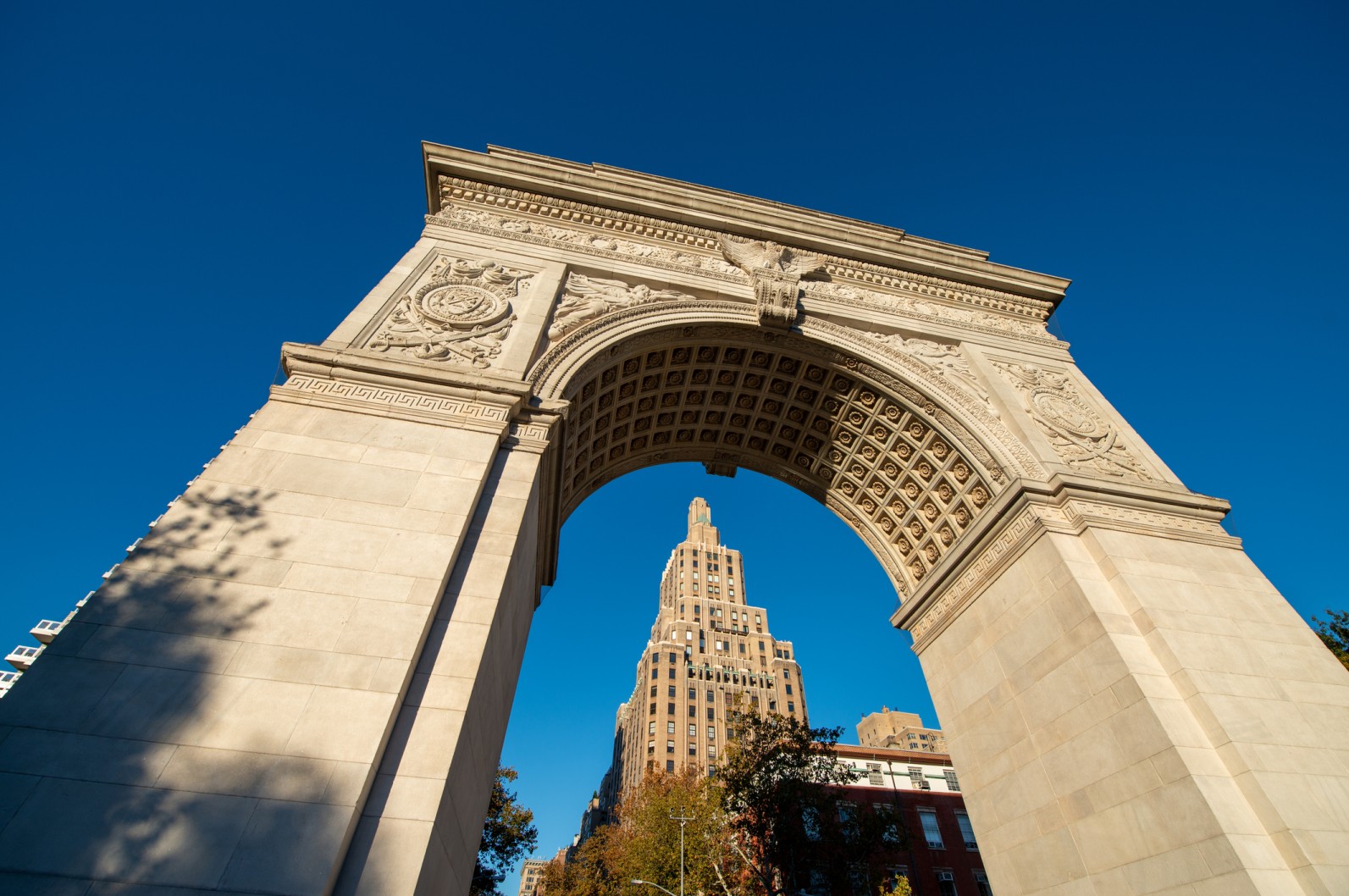
Weekday mornings before 10am are the opposite: quiet, with dog walkers and NYU students crossing to class, and the arch and fountain empty for photographs. The light up Fifth Avenue from beneath the arch is best in the morning.
Summer evenings stay lively until late, and the fountain runs from spring through fall. In winter the park is calm and stark, and the arch is lit at night. The park is free and outdoors, so it works in any season, but if you want to see it as the Village's living room, come on a warm Saturday or Sunday between 2 and 6pm.
Washington Square Park is in Greenwich Village at the southern end of Fifth Avenue, and it's one of the easiest parks in the city to reach. Take the A, B, C, D, E, F, or M train to West 4th Street–Washington Square, which exits two blocks from the park's southwest corner, or the N, R, or W to 8th Street–NYU, a four-minute walk to the arch.
The 6 train stops at Astor Place, about ten minutes east, and the 1 at Christopher Street, ten minutes west. From the park, the Friends apartment building at 90 Bedford Street is a ten-minute walk, and SoHo's shopping is ten minutes south.
Use our interactive NYC subway guide to plan your exact route from any hotel or neighborhood before you arrive.