
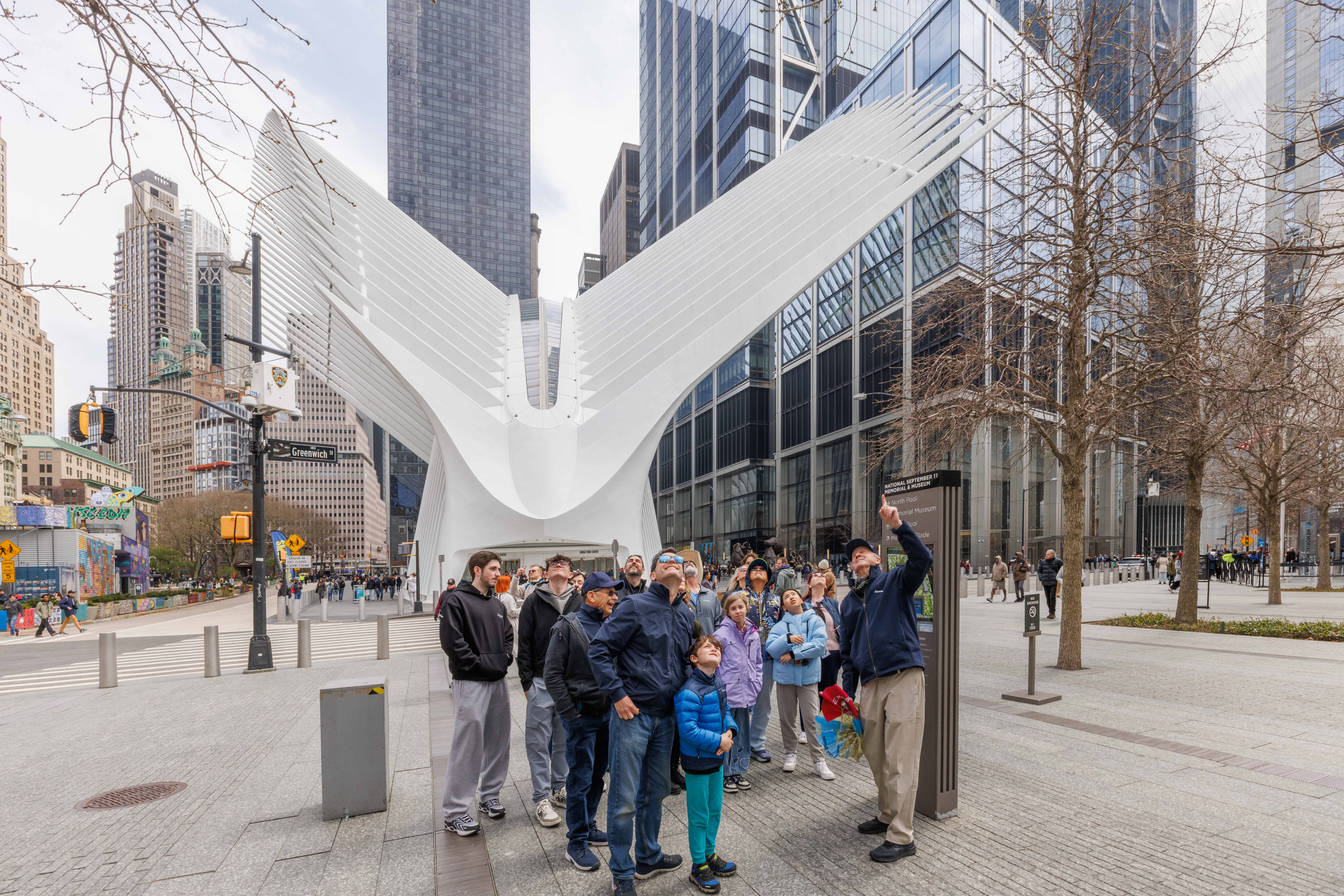
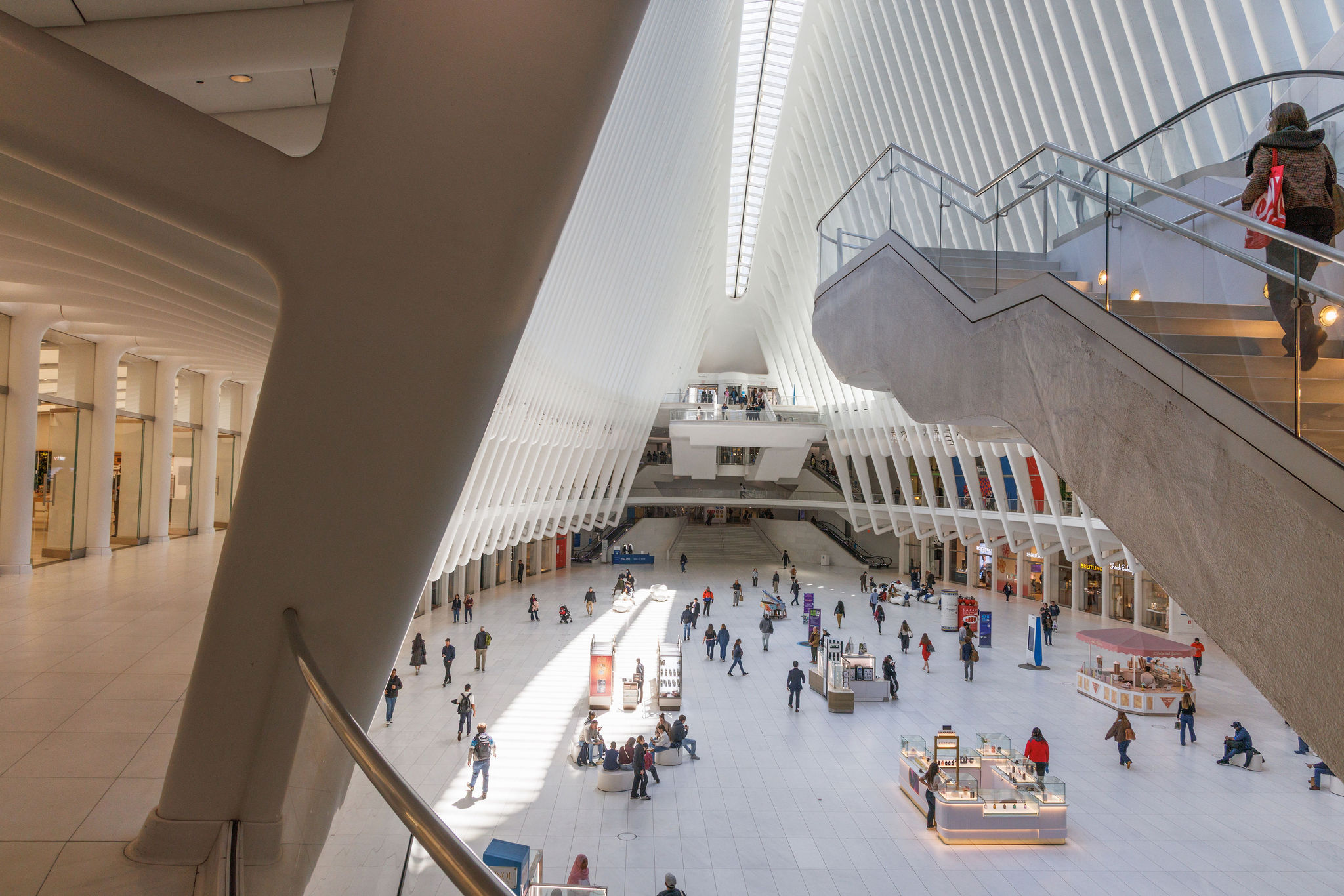
The Oculus is the white, winged structure at the center of the World Trade Center site, and officially the World Trade Center Transportation Hub: the Manhattan terminal for PATH trains from New Jersey, a connection point for a dozen subway lines, and a shopping concourse, all beneath a soaring main hall that has become one of the most photographed interiors in New York City. Designed by the Spanish architect Santiago Calatrava and opened in March 2016, it cost about $4 billion, which made it the most expensive train station ever built.
.webp)
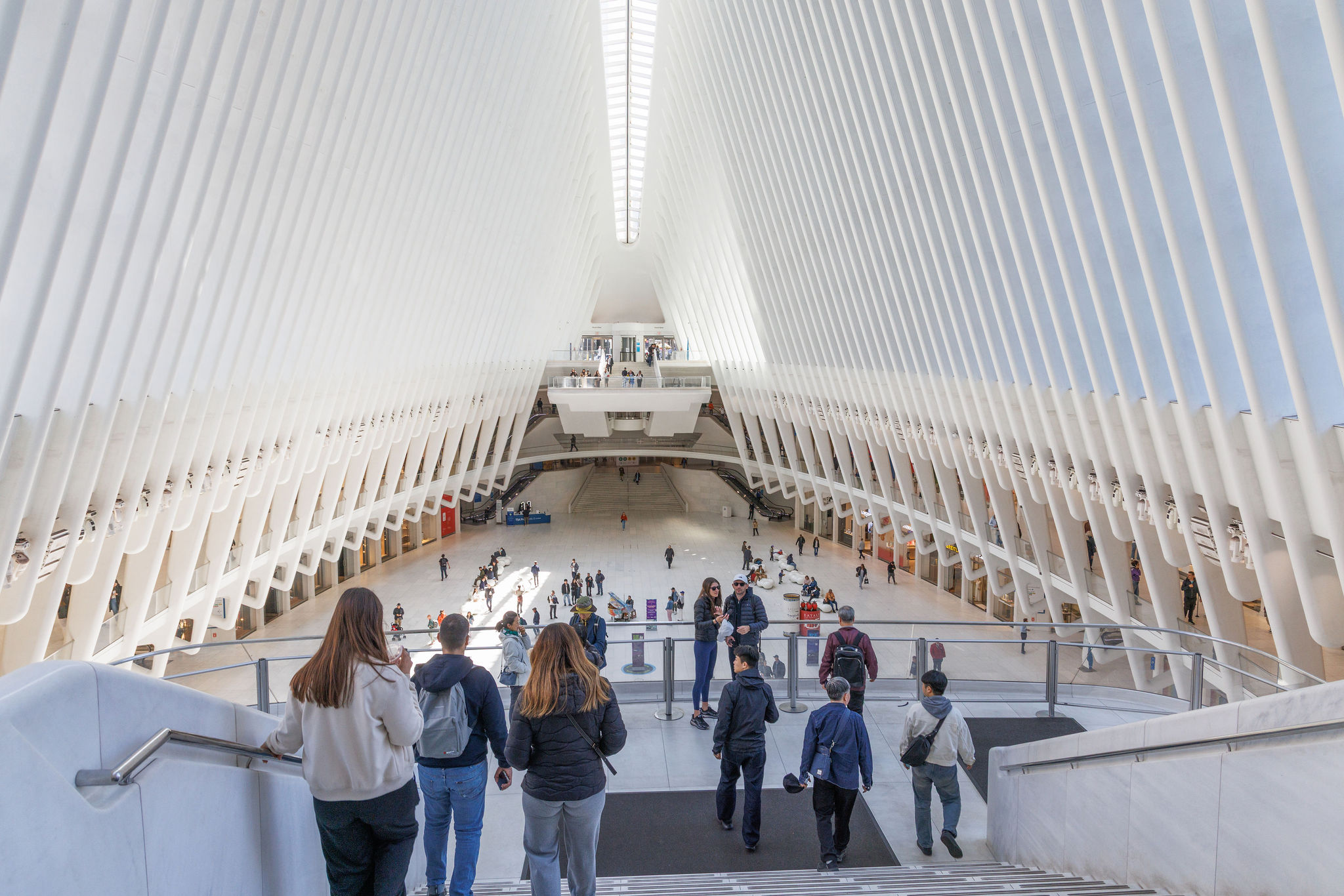
Calatrava's idea was a bird released from a child's hands. Two rows of white steel ribs rise as wings on either side of a 330-foot skylight, and inside the main hall the ribs continue down to a floor of white Italian marble deliberately left empty, so that visitors stand inside the skeleton looking up. The skylight opens once a year, on September 11, for 102 minutes from 8:46 to 10:28am, the span of the attacks, letting a band of sunlight fall across the floor at the moment the North Tower fell. Calatrava called it the Way of Light.
Beneath the hall, the Westfield World Trade Center concourse holds about a hundred shops, an Apple Store, and food, along with the restrooms that the 9/11 Memorial plaza next door doesn't have. Underground passages connect the Oculus to nearly every subway line in Lower Manhattan, to Brookfield Place on the Hudson, and to the memorial and museum directly to the west. Most visitors walk through it twice without learning what it is.
The Oculus opened in 2016 at the rebuilt World Trade Center. Here are the key facts every visitor should know:
The Oculus's main hall is open around the clock as a station, and the shops keep retail hours, so the visit is about light and crowds.
Weekend mornings before 9am are the best time for the empty-hall photograph: the marble floor is clear, the light comes evenly through the skylight, and you can shoot from the balconies without anyone in the frame. Weekday rush hours, from 8 to 9:30am and 5 to 6:30pm, fill the hall with PATH commuters, which makes a different and lively picture but a crowded visit.
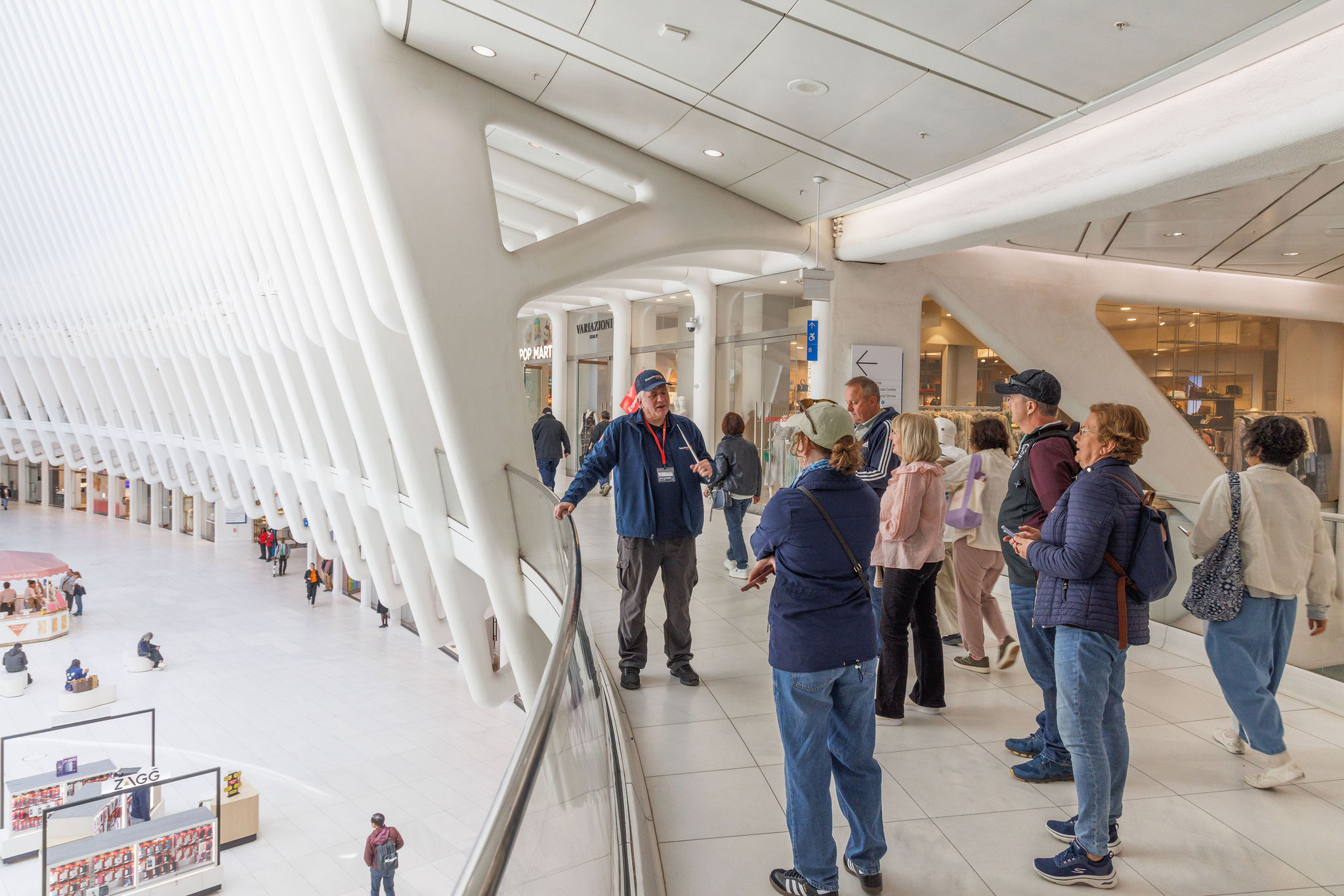
Midday light comes straight down through the skylight and flattens the white ribs; late afternoon is softer. After dark, the hall is lit from within and glows through the ribs from outside, and the view from the memorial plaza side at night is worth the detour.
On September 11 the skylight is open and the hall is quiet and solemn; check ahead if you plan to visit that day, as access around the site changes for the anniversary. In any weather, the Oculus is the indoor refuge of the World Trade Center site, the place to warm up, use the restrooms, and cross underground.
The Oculus is at the World Trade Center in Lower Manhattan, between the 9/11 Memorial plaza and Church Street, and it's a subway station, so the easiest way to arrive is underground. Take the R or W train to Cortlandt Street or the E train to World Trade Center, both of which exit directly into the main hall. The 1 train to WTC Cortlandt is a short passage away.
The A, C, J, Z, 2, 3, 4, and 5 trains stop at Fulton Street and connect to the Oculus by an underground corridor. PATH trains from New Jersey arrive inside. From the street, the entrance is on Church Street at Fulton Street, and the 9/11 Memorial pools are a two-minute walk west through the hall.
Use our interactive NYC subway guide to plan your exact route from any hotel or neighborhood before you arrive.
%20(23)-min.webp)


